
Table of Contents
- Why Fall Foliage Nearby Is Worth the Short Drive
- Use a Fall Foliage Map to Time Your Trip Right
- Reading the Peak Fall Foliage Forecast Before You Go
- 1. Fall Foliage Scenic Drives Within a Day's Reach
- 2. Fall Color Hikes Near Me: Trails for Every Pace
- 3. State Parks, Forests, and Recreation Areas for Colorful Trees
- 4. Lakes, Rivers, and Waterfalls for Reflected Autumn Leaves
- 5. Charming Towns and Local Spots Near the Best Vistas
- Frequently Asked Questions
Last Updated: October 19, 2026
Why Fall Foliage Nearby Is Worth the Short Drive
Fall foliage season rewards travelers who skip the long haul. The best color is often a tank of gas away, not a plane ride.
Nearby beats far away in autumn.
Leaf color is a moving target, starting in cooler pockets and moving downslope and southward over several weeks.
The plans below suit day trips and weekend getaways alike, showing you how to time the color, pick a route, and avoid the crowds.
Use a Fall Foliage Map to Time Your Trip Right
A fall foliage map is the single most useful tool for planning an autumn drive, if you know which map to open and how to translate its colors into a route decision.
Where the reliable maps actually live
Three sources publish foliage maps you can trust, and each has a different update rhythm:
- State tourism and park system pages. Most state park systems post a fall color report that updates weekly from late September through early November. These are the most location-specific and usually note which trails or overlooks are at peak.
- The U.S. Forest Service fall color hotline and regional pages. U.S. Forest Service fall color resources publish regional guidance and a phone hotline for many national forests. Useful when your target is public land rather than a state park.
- Commercial foliage trackers. Several weather and travel sites run nationwide maps that update daily in October. They are convenient for a quick regional read but lag behind park staff on local detail.
Use the commercial map for the big picture, then confirm with the state park report for your specific trail or overlook.
How to read a map like a planner, not a tourist
Most maps use a simple scale: green for no change, yellow and orange for building color, red for peak, brown for past peak. The other half of the story is elevation and aspect.
- Elevation first. Higher ground turns earlier than valleys, often by one to two weeks. If your target is a ridge drive, check the high-elevation zone, not the valley town.
- Aspect second. South- and west-facing slopes warm earlier and can peak before north-facing slopes a few miles away. A map that shows a county as "near peak" may hide a split between a sunny ridge and a shaded hollow.
- Compare two nearby zones. Pick the one closer to peak rather than the one with the prettier name.
The map is a guide, not a guarantee. Confirm with a quick call to the park or recent visitor photos.
Turning the map into a drive decision
Once you have a color reading, convert it into a plan in three steps:
- Pick a target zone one step behind peak. A zone showing yellow-to-orange will usually be at peak within a week, which is ideal if you are planning a weekend out.
- Pick a backup zone one step ahead. If your first choice goes brown, the backup is your fallback without a full replan.
- Check the drive time between them. If the two zones are more than about two hours apart, the backup is not realistic for a day trip; pick a closer pair.
That two-zone approach is the practical fix for the moving-target problem, and why a short drive beats a long one in autumn: you can shift your target by an hour instead of a day.
Reading the Peak Fall Foliage Forecast Before You Go
A peak fall foliage forecast tells you when color will hit its best in a given area, combining temperature, daylight, and rainfall patterns to estimate timing.
Color peaks on a rolling schedule: northern and high-elevation spots turn first, with lower and southern areas following a week or two later. If you miss peak in one place, another spot nearby is likely still climbing.
A few signals shape the forecast:
- Cool nights and sunny days push toward vivid color.
- A dry stretch can dull the show and shorten it.
- Early frost can end the season fast in exposed spots.
Check the forecast about a week before you go, then again two days out. That final check catches a cold snap or a storm that changes everything. For official seasonal outlooks, U.S. Forest Service fall color resources publish regional guidance worth a look.
1. Fall Foliage Scenic Drives Within a Day's Reach
Fall foliage scenic drives are the easiest way to see a lot of color with little effort. You stay in the car, cover more ground, and stop only where the view earns it, ideal for families, older travelers, or anyone short on time.
The best drives run through mixed forest, follow a river or ridge, and offer pull-offs for photos. Two-lane backroads beat interstates every time, you trade speed for scenery, and that's the point.
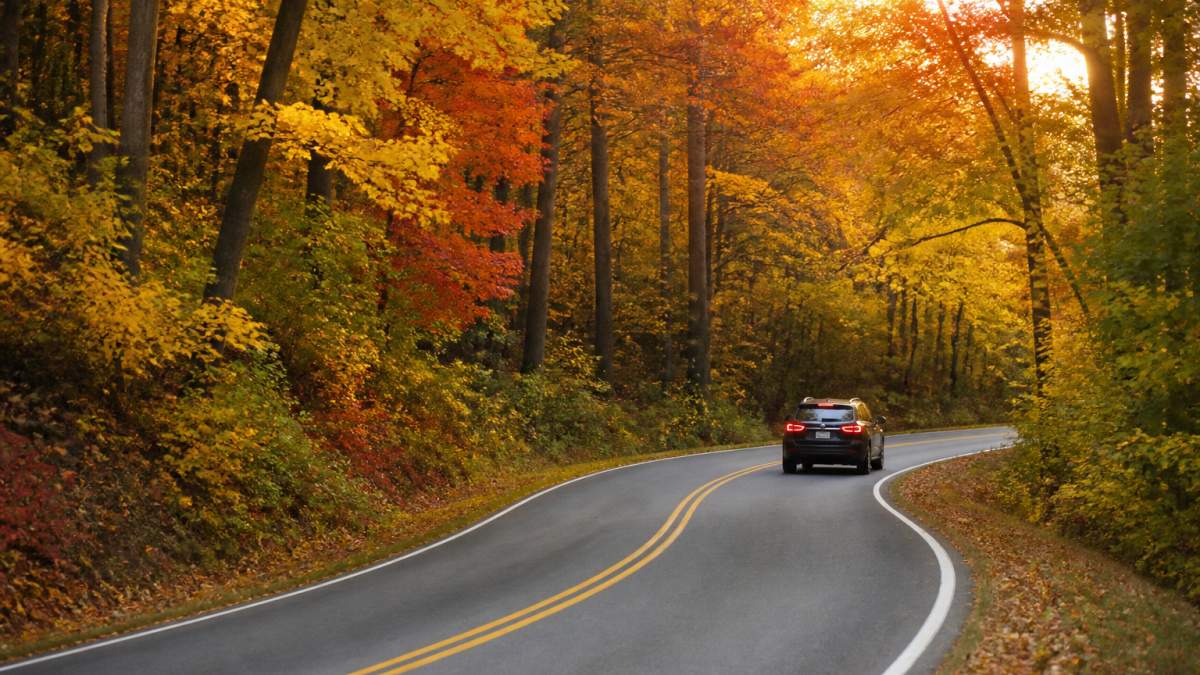
Backroads and Byways for Roadside Views
Scenic byways are marked routes chosen for their views, and many states designate autumn byways specifically for leaf-peeping. Look for routes that follow rivers, climb ridges, or loop through state forests, putting colorful trees right at the roadside.
Pick a loop over an out-and-back when you can. A loop shows you new scenery the whole way. Aim for 50 to 80 miles, which fills a comfortable half day with stops.
Planning Your Drive Time and Stops
Plan your drive around daylight, not distance. Color looks best in mid-morning and late afternoon light. Build in 15-minute photo stops every 30 to 45 minutes. Pack water and snacks so you're not hunting for food mid-route.
| Drive Plan | Time | Best For |
|---|---|---|
| Short loop | 1-2 hours | Families, quick outings |
| Half-day loop | 3-4 hours | Couples, photographers |
| Full-day route | 5-6 hours | Dedicated leaf-peepers |
Check road closures before you go. Some mountain and forest roads close after early snow. A quick call to the local ranger station saves a wasted trip.
2. Fall Color Hikes Near Me: Trails for Every Pace
Searching for fall color hikes near me usually turns up trails that are too hard or too crowded. Match the trail to your group: easy walks and overlooks deliver big color with little effort, while longer hikes reward you with quieter views.
Start with trail distance and elevation gain, not just the view. Leaves cluster along waterways and in valleys, so a flat river trail can outshine a steep summit climb.
Easy Walking Trails and Overlooks
Easy trails suit families, older hikers, and anyone who wants a relaxed day. Look for paved paths, boardwalks, and short loops under two miles. Overlooks at the end of a short walk give you the payoff without the climb.
A few things to check before you go:
- Trail surface: paved, gravel, or dirt
- Distance and elevation gain
- Parking size and overflow options
Longer Hikes for Serious Leaf-Peepers
Serious hikers can trade crowds for quiet. Longer trails, four to eight miles, often lead to ridge views and secluded groves. Go early to beat the rush and catch soft morning light. Bring layers, because shaded trails run cooler.
Check park websites for trail closures and hunting-season notices. Some forest trails close or restrict access in autumn.
3. State Parks, Forests, and Recreation Areas for Colorful Trees
State parks and forests are the backbone of any nearby foliage trip, protecting large stands of colorful trees and usually charging little or nothing to enter. They often give you trails, overlooks, and picnic spots in one place.
Most guides stop at "go to a state park." The useful version is the visit-planning layer: which parks to target, what it costs, whether you need a reservation, where to park, and which overlooks work for people who cannot hike far.
What to look for in a park or forest
- A mix of tree species, which stretches the color season
- At least one overlook or vista point reachable by car or a short walk
- Trails rated for different fitness levels
Practical visit planning: fees, reservations, and parking
Entry costs vary widely by state system. Many state parks charge no entrance fee but charge a per-vehicle day-use fee; some charge nothing at all.
Reservations are the bigger planning trap. A growing number of state parks require advance day-use or parking reservations during peak fall weekends, especially at popular overlooks and trailheads.
Parking is the most common reason a foliage trip goes wrong.
Accessibility and low-effort viewing
Not every foliage viewer wants a hike. Look for these features on the park page before you commit:
- Paved or boardwalk paths to an overlook, suitable for wheelchairs, strollers, and walkers
- Drive-up overlooks where the view is at the parking area
- Accessible restrooms and benches along the route
Many state park systems publish an accessibility guide that flags which trails and overlooks meet those standards. When it exists, it is more reliable than a general trail list.
Timing your park visit
State park systems publish fall color updates on their websites, usually weekly. For broader public-land guidance, National Park Service fall visits offer seasonal tips on timing and crowds. Pair the park's color report with its trail conditions page, then confirm road and gate hours, since some forest roads close after early snow or for seasonal wildlife management.
4. Lakes, Rivers, and Waterfalls for Reflected Autumn Leaves
Water doubles the color: a calm lake or slow river reflects colorful trees and turns a good view into a great one.
Plan water stops for calm mornings. Wind picks up by afternoon and breaks up reflections.
Best water settings for autumn leaves:
- Calm lakes for mirror reflections at sunrise
- River bends and banks lined with colorful trees
- Waterfalls framed by forest, best after light rain
Accessibility matters here. Many lakeside paths and docks are flat and paved.
Keep safety in mind near water. Rocks get slick, and cold autumn water is dangerous.
5. Charming Towns and Local Spots Near the Best Vistas
The best foliage trips pair color with a charming town.
Plan your day around a town as your base. Drive the nearby byways in the morning, then return for lunch and a walk. This breaks up the driving and gives everyone a break.
What makes a good foliage-day town:
- A walkable main street with local shops
- Cafes and diners with room to sit
- A park or square with colorful trees
Ask locals where they go for color. A shop owner or server often names a quiet road or overlook that beats the crowded spots.
For trip planning help, our team curates local recommendations so you spend less time guessing and more time enjoying the color, focusing on the details that make a short trip work: timing, routes, and the spots locals actually use.
Frequently Asked Questions
When is peak fall foliage in my area?
Peak fall foliage varies by latitude and elevation. In most regions, peak color arrives between late September and late October, with higher elevations turning first. Check a fall foliage map or your state's tourism website for week-by-week updates. Weather matters too: warm, sunny days followed by cool nights tend to produce the brightest colors. Book your trip a week or two before the forecasted peak to catch the transition, and stay flexible so you can shift plans if conditions change.
Where can I find fall foliage without the crowds?
Skip the famous overlooks on weekend afternoons. Instead, aim for state forests and lesser-known recreation areas, visit on weekday mornings, and take backroads rather than main highways. A fall foliage map can help you spot quieter pockets near popular parks. Local spots like small-town parks, river trails, and wildlife viewing areas often deliver colorful trees with far fewer visitors. Pack layers, arrive early, and have a backup trail in mind in case your first choice is busy.
Are there scenic fall foliage drives nearby?
Most regions have at least one designated scenic byway within a short drive. Look for routes that follow rivers, climb into foothills, or pass through state forests, since these tend to have the most varied colorful trees. Plan your drive time around mid-morning light for the best roadside views, and build in stops at overlooks, small towns, and parks. Check road conditions and any seasonal closures before you go, and keep your tank topped up on rural stretches.
What should I check before planning a fall foliage trip?
Start with a peak fall foliage forecast for your target area, then confirm park hours, trail distance, and any accessibility details for the spots you want to visit. Check weather forecasts and pack for cool mornings and warm afternoons. If you plan to hike, bring water, a map, and sturdy shoes. For scenic drives, note drive time and fuel stops. Finally, look up crowd patterns and consider a weekday visit to avoid the busiest overlooks and trailheads.
Autumn color is close, but the window is short. The challenge is timing it right and knowing where to go before the crowds arrive. Kansas City helps you plan a confident nearby getaway with locally grounded guidance, curated recommendations for attractions and stops, and practical trip-planning support. Get started with Kansas City and turn a short drive into a memorable fall day.