Last Updated: October 25, 2026
Quick Summary
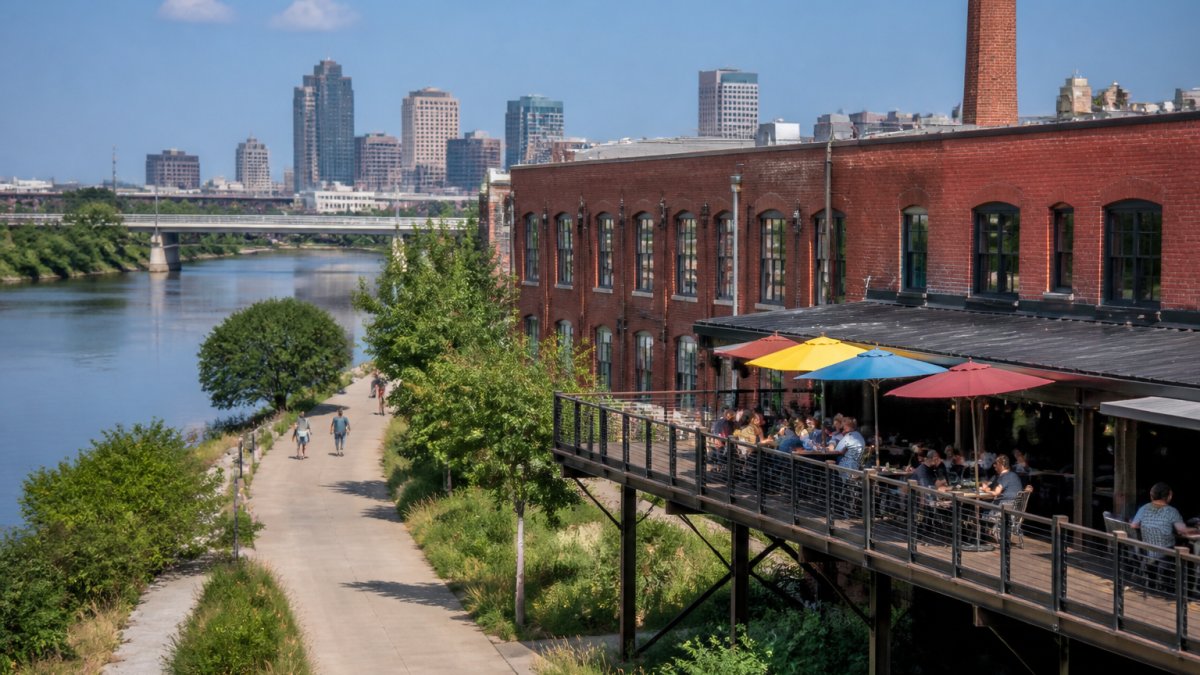
The River Market neighborhood is downtown's most vibrant mixed-use area, blending historic architecture with modern urban living, thriving food culture, and authentic local character centered around City Market, a farmers market and community gathering space operating continuously since 1870.
- City Market operates year-round with full vendor presence on weekends and limited vendors on weekdays
- The neighborhood features artist studios, galleries, riverfront access, and restaurants sourcing from local farmers and producers
- Weekend mornings from 9 a.m. to 1 p.m. offer peak market activity with the fullest vendor selection and atmosphere
- Converted warehouse lofts and new residential buildings have transformed River Market into a mixed-use neighborhood with significant residential population
- The neighborhood's compact, walkable layout rewards exploration on foot with galleries, murals, shops, and unexpected discoveries
Table of Contents
- What Makes River Market Downtown's Best Neighborhood
- City Market Kansas City Hours and What to Expect
- Things to Do in River Market Kansas City Beyond the Market
- River Market Kansas City Restaurants and Local Food Culture
- River Market Kansas City Parking and Getting Around
- Living in River Market: Condos, Urban Living, and Community
- Planning Your First Visit to River Market
- Frequently Asked Questions
What Makes River Market Downtown's Best Neighborhood
The River Market neighborhood is downtown's most vibrant mixed-use area, blending historic architecture with modern urban living, thriving food culture, and authentic local character.
The neighborhood's appeal lies in its authenticity. Unlike manufactured entertainment districts, River Market grew organically from genuine community needs. Farmers brought produce to the riverfront. Local entrepreneurs opened restaurants around them. Residents moved into converted warehouse lofts.
For visitors and potential residents, the River Market neighborhood offers something increasingly rare in urban areas: walkability without sterility, density without congestion, and local flavor that hasn't been packaged for tourists. The neighborhood maintains its working-class roots even as property values climb.
City Market Kansas City Hours and What to Expect
City Market operates year-round, but the experience changes dramatically depending on the day and season. The single most useful thing to know before you go: weekends are the full market, weekdays are a quieter version of it. Plan your visit around that split and you avoid the most common disappointment, showing up on a Tuesday expecting Saturday.
Weekday versus weekend
- Saturday and Sunday are peak market days. Vendor presence is at its fullest, the outdoor spaces are active, and the crowd energy is highest. Weekend mornings from late morning into early afternoon are the sweet spot for selection and atmosphere.
- Weekdays are calmer. Many outdoor and semi-permanent vendors are not present, though permanent storefronts, shops, and restaurants around the market remain open on their own schedules. Weekdays are better for a low-key browse and worse for a full market haul.
- Early mornings beat mid-afternoon on any day for produce selection and parking, especially on weekends.
Seasonal rhythm
Warmer months bring the fullest outdoor footprint, additional vendor stalls, live music, and seasonal events in the plaza. Colder months shift activity indoors and toward the permanent vendors and surrounding storefronts. Holiday-season weekends tend to be especially busy. Because individual vendor schedules shift with the season, treat any single posted hour as a starting point and confirm with the specific vendor or the market's own listing before a dedicated trip.
What to expect on the ground
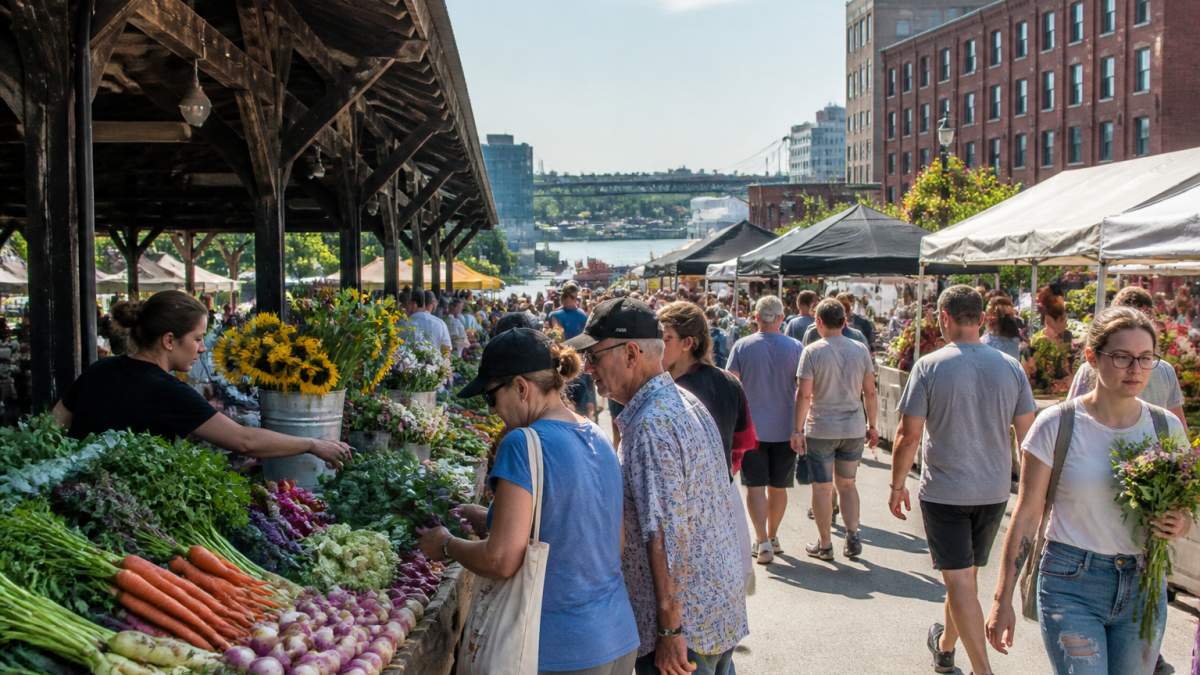
The market spans multiple buildings and outdoor spaces. Explore our detailed Kansas City travel guide for more information about City Market's history, food culture, and what to expect during your visit. The main shed houses permanent and semi-permanent vendors selling produce, flowers, baked goods, and prepared foods; surrounding storefronts include specialty shops, coffee roasters, and restaurants; the outdoor plaza hosts events and additional stalls in season.
- Payment: a mix of cash and card. Not every vendor takes every method, so carry some cash as a backup.
- Crowds: expect to navigate through other shoppers on weekend mornings, that is the normal experience, not a problem to solve.
- Bags: bring reusable bags if you plan to buy produce.
- Atmosphere: this is a working market first. Visitors expecting a polished, curated farmers-market experience sometimes find it slightly chaotic. That is the point.
The neighborhood's market culture extends beyond City Market itself, restaurants source from vendors and local coffee shops roast nearby, so even a weekday visit still delivers the farm-to-table character the district is known for.
River Market's experience varies significantly based on when you visit.
| Timing | Vendor Presence | Best For | Crowds |
|---|---|---|---|
| Saturday and Sunday mornings | Full outdoor and permanent vendors | Maximum selection and atmosphere | Peak activity |
| Weekdays | Permanent storefronts only, fewer outdoor vendors | Low-key browsing | Minimal |
| Early mornings any day | Best produce selection | Fresh items and parking | Thinner than midday |
| Warmer months | Additional vendor stalls and live music | Full outdoor footprint | Higher |
| Colder months | Activity shifts indoors | Permanent vendors and storefronts | Lower |
Things to Do in River Market Kansas City Beyond the Market
River Market's appeal extends well beyond shopping. The neighborhood offers galleries, restaurants, bars, and riverfront access that make it a destination for full days, not just market visits.
The River Market Gallery District features artist studios and galleries concentrated in the warehouse district surrounding City Market.
Riverfront access provides walking and biking paths along the Kansas City riverfront. The neighborhood's position on the Missouri River creates natural green space and views that feel removed from downtown's urban core.
The neighborhood also functions as a dining and nightlife destination. Beyond the restaurants directly in River Market, surrounding blocks in North Downtown offer additional options.
Explore the neighborhood on foot. This is the neighborhood's strength: genuine discovery rather than curated highlights. You can explore guided tours that cover River Market sightseeing and activities beyond just the market itself.
River Market Kansas City Restaurants and Local Food Culture
River Market's food culture represents authentic Kansas City dining, built on direct relationships between restaurants and farmers, roasters, and producers.
The market itself hosts food vendors selling prepared foods, smoothies, baked goods, and coffee. These aren't chains but local operators who've built their businesses within the market environment.
Surrounding restaurants in River Market and North Downtown extend this philosophy. Menus change seasonally based on what local farmers provide.
The coffee culture deserves specific mention. Multiple roasters operate in or near River Market, many roasting on-site. The neighborhood's coffee culture developed organically from the market's early morning activity.
For visitors, this means authentic food experiences but also unpredictability. The food scene prioritizes quality and authenticity over convenience and consistency. Guided food tours showcase River Market's dining scene and local vendors.
River Market Kansas City Parking and Getting Around
Getting to River Market is the part of the trip most guides gloss over. The neighborhood sits just north of downtown's loop, bounded roughly by the Missouri River to the north and Independence Avenue to the south, which means arrival logistics depend heavily on whether you drive, ride the streetcar, or walk in from downtown. Plan around the market's peak window, weekend late mornings, and the rest of the trip gets easier.
Driving and parking, step by step
- Decide your arrival window first. Saturday and Sunday from roughly 9 a.m. to 1 p.m. is when City Market and the surrounding blocks are busiest. Arriving before 9 a.m. or after 1 p.m. materially changes your parking odds.
- Aim for a public lot, not the street. Surface lots and structured parking surround the market district. Rates are set by each operator and posted at the entrance, so read the sign at the gate rather than assuming a flat rate, event days can carry different pricing than a normal market morning.
- Use on-street metered parking as a backup. Meters in the surrounding blocks are enforced; check the posted hours and pay via the meter or the city's mobile payment option rather than assuming a grace period.
- Expect to circle during peak hours. The realistic plan is to arrive early, park once, and walk, not to hunt for a spot adjacent to the main shed.
Accessible parking and mobility
Accessible spaces are available in the public lots serving the market district, and the market's main shed and surrounding sidewalks are generally navigable for wheelchairs and strollers, though historic brick and cobblestone sections can be uneven. If mobility is a concern, target the paved approaches and the flatter lots rather than the oldest cobbled stretches, and arrive early when crowds are thinner. Vendors and market staff are the fastest source of on-the-ground guidance for the closest accessible space on a given day.
Streetcar, bus, and rideshare
The KC Streetcar runs through downtown and connects to the River Market area, making it a car-free option for anyone already staying or parking elsewhere in the downtown core. Local bus routes also serve the neighborhood. For a door-to-door arrival without parking, rideshare drop-offs at the market's edge work well, just expect surge pricing during peak market and event hours.
Biking and walking
Riverfront trails and the neighborhood's flat, grid-like layout make biking practical, and bike parking is available around City Market and nearby businesses, though racks fill during busy weekends. Walking in from downtown is genuinely viable given the short distance.
Living in River Market: Condos, Urban Living, and Community
River Market has transformed from a primarily commercial market district into a mixed-use neighborhood with significant residential population.
The residential market in River Market reflects broader downtown Kansas City trends. Warehouse conversions offer loft-style living with high ceilings, exposed brick, and industrial character.
The community aspect of River Market extends beyond real estate. Neighborhood associations, regular events, and the market's central gathering function create genuine community identity. Long-time residents coexist with newcomers.
For potential residents, River Market offers walkability to restaurants, galleries, and riverfront access. The neighborhood's density provides urban convenience without feeling overwhelming.
The trade-offs are real. Parking remains challenging for residents as well as visitors. Market activity and neighborhood events create noise and crowds. The neighborhood's popularity has driven property values up significantly.
Planning Your First Visit to River Market
A first visit to River Market works best when structured around the market's schedule and the neighborhood's walkable layout.
Plan for at least two to three hours for a market visit combined with exploring the immediate neighborhood. This allows time to browse vendors, purchase items, grab food or coffee, and explore surrounding galleries and shops. Longer visits enable wandering into North Downtown restaurants and bars.
Bring cash. While many vendors accept cards, cash remains common and sometimes preferred. Bring reusable bags for purchases. Wear comfortable shoes, the market and surrounding neighborhood reward walking.
Start at City Market itself, exploring the main shed and outdoor spaces. Purchase items directly from farmers and vendors. Grab coffee or food from market vendors.
The neighborhood's best experiences come from wandering rather than following a planned itinerary.
For returning visits, explore different restaurants, visit galleries during different seasons, and experience the neighborhood during different times of day.
River Market represents downtown Kansas City at its best: authentic, walkable, and genuinely community-driven.
Frequently Asked Questions
What is the difference between River Market and City Market?
River Market is the neighborhood in North Downtown that surrounds City Market. City Market is the specific farmers market and public marketplace located within the River Market neighborhood. City Market operates seasonally with vendors selling produce, flowers, and artisan goods, while River Market includes the broader area with restaurants, bars, condos, and year-round attractions. Think of City Market as the anchor attraction within the larger River Market community.
Is River Market walkable for visitors?
Yes, River Market is highly walkable. The neighborhood is compact and pedestrian-friendly, with most attractions, restaurants, and bars within easy walking distance of each other. The riverfront adds to the walkable experience. Street-level parking is available, and the neighborhood also connects to public transit via streetcar and bus routes, making it accessible without a car if you prefer.
What time is the River Market open in Kansas City?
City Market operates year-round with seasonal variations. Weekend markets typically run Saturday and Sunday mornings and early afternoons, though hours vary by season. The neighborhood itself, including restaurants, bars, and shops, operates throughout the week and into the evening. Check the official City Market website for current hours before visiting, as seasonal changes and special events can affect operating times.
How do you get to River Market by streetcar?
The Main Street Trolley streetcar provides direct access to River Market. The streetcar runs from Union Station through downtown, with stops near the River Market neighborhood. This makes it easy to reach the area from other downtown attractions without needing a car or parking. Bus routes also serve the neighborhood, offering multiple transit options for visitors and residents.
