Table of Contents
- Before You Go: A Step-by-Step Family Museum Day Planning Checklist
- Building a Family Museum Day Itinerary That Actually Works
- How Long to Spend at a Museum With Kids (and When to Call It a Day)
- What to Pack for a Museum Day With Kids: The Short List
- Turn the Visit Into a Museum Scavenger Hunt for Kids
- Getting Around Downtown: Parking, Transit, and Walking Routes
- Food, Breaks, and Budgeting the Full Day
- Planning for Different Ages, Accessibility, and Sensory Needs
- Frequently Asked Questions
Last Updated: October 19, 2026
Before You Go: A Step-by-Step Family Museum Day Planning Checklist
A family museum day downtown works best when you plan the boring parts first: pick your date, check hours, and lock in tickets before anything else.
Families who book ahead walk in calm; families who wing it spend the first hour in a ticket line.
Here's the short version of what to handle before you leave the house:
- Choose a date and check that the museum is open (holidays trip people up)
- Confirm opening hours and the last entry time
- Book general admission or timed entry online
Pick Your Date and Check Museum Hours
Start with hours, not tickets. Museum hours change by season, and many downtown museums close one weekday, so check the official site first.
Weekday mornings are the calmest window for young kids; weekend afternoons draw the biggest crowds, especially during school breaks.
Also confirm the last entry time. Some museums stop admitting visitors well before closing, and that detail is easy to miss.
Book Tickets and Reserve Timed Entry Online
Book online whenever the museum offers it. Advance reservation gets you past the ticket line and guarantees entry on busy days.
Timed entry turns a vague "sometime today" into a real start time. Book the first slot of the day if you can.
Check ticket availability a week out for weekends, and book further ahead for popular museums during school holidays.
Building a Family Museum Day Itinerary That Actually Works
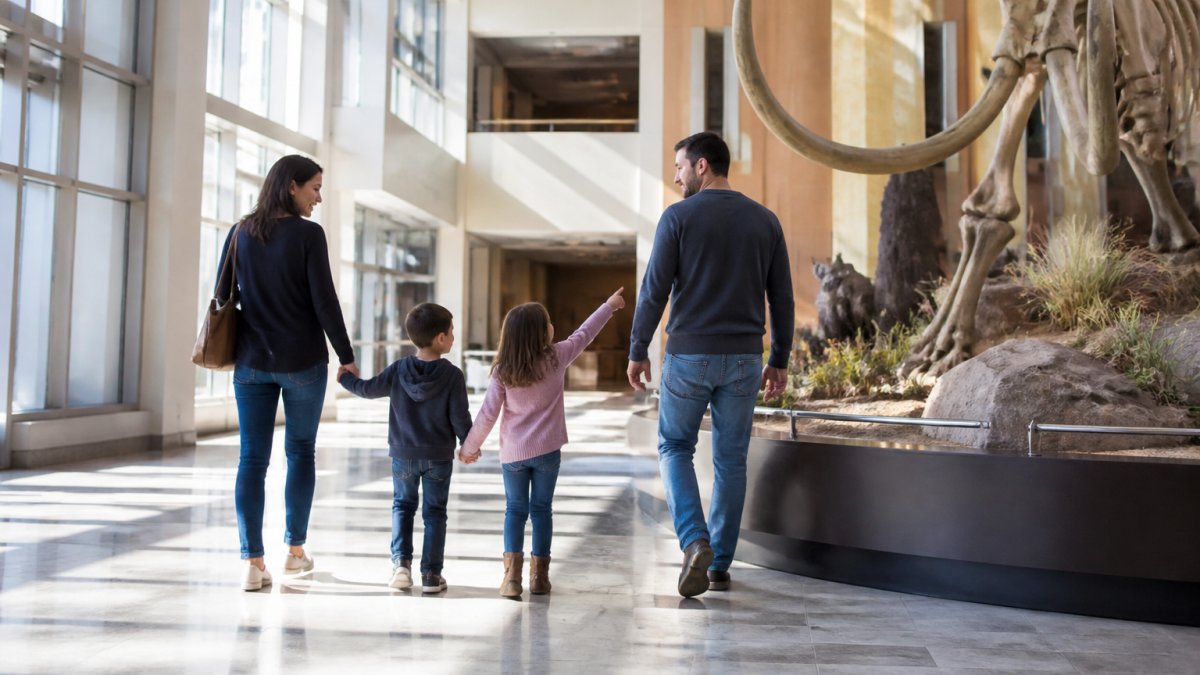
A family museum day itinerary should follow your kids' energy, not the museum's floor plan: front-load hands-on exhibits while everyone is fresh, then slow down after lunch.
Here's the shape that works for most families:
- Morning visit (first 90 minutes): Hit the interactive exhibits and hands-on exhibits your kids care about most.
- Mid-morning break: Snack, water, bathroom stop. Do this before anyone melts down.
- Late morning: Art exhibits or quieter galleries, when attention is still decent.
- Lunch: Eat on the museum campus or nearby downtown.
- Afternoon: One more short block, then go.
Don't treat the museum as a checklist. You will not see everything, pick three things your family actually wants and build the day around those.
How Long to Spend at a Museum With Kids (and When to Call It a Day)
Two to three hours is right for most families with young children; older kids who are genuinely interested can handle three to four hours with breaks.
Watch for the signals, not the clock. Whining, running, and flopping on benches mean the visit is over, even if you planned another hour.
A common mistake is buying a full-day plan when your kids have a two-hour tank. Build in an easy exit.
What to Pack for a Museum Day With Kids: The Short List
What to pack for a museum day with kids comes down to a small bag you can carry all day.
- Water bottles for everyone
- Snacks that don't crumble or stain
- A layer for cold galleries (museums run cool)
If your child still naps or tires easily, bring the stroller. Most museums allow them, but check the rules for special exhibitions, where they're sometimes restricted.
Skip the giant backpack. Many museums limit bag size, and you'll be carrying it for hours.
Turn the Visit Into a Museum Scavenger Hunt for Kids
A museum scavenger hunt for kids turns looking into a game and keeps everyone moving at the same pace.
Build a simple list before you go: five or six items matched to the museum's collection.
- Find an animal in a painting
- Spot something older than your grandparents
- Find a painting with your favorite color
For older kids, add a question: "Which object would you take home and why?" That turns a hunt into a conversation.
Getting Around Downtown: Parking, Transit, and Walking Routes
Downtown museum districts are usually walkable, and walking is often faster than moving the car between stops. Park once, then cover the day on foot or by transit, families who move the car lose 20 to 30 minutes per hop to circling, re-parking, and unloading kids.
Build a Single Arrival Plan
Pick one anchor garage near your first museum as home base for the day. Before you leave, confirm three things on the museum's and garage operator's sites:
- The garage's posted hours (some downtown garages close early on weekends)
- The clearance height, if you drive an SUV with a roof box
- Whether the garage has an elevator or only stairs, this matters with a stroller
A common pattern is to arrive 20 to 30 minutes before opening, which covers the garage-to-door walk, a bathroom stop, and the ticket check without rushing. If you book the first timed-entry slot, aim to be in the garage 30 minutes ahead.
Street Parking vs. Garage: The Trade-Off
Street parking near museums fills early, especially on weekends and during school breaks, and meters often have short time limits that force a mid-day move. A garage is the safer bet with kids: you pay once and stay put.
If you try street parking, look for metered blocks two to three streets off the main museum corridor. Rates and time limits are posted on the meter and the local parking authority's site, feed the meter for the full planned stay, not just the first block of time.
Transit: Turn the Ride Into Part of the Day
If your downtown has light rail, a streetcar, or a frequent bus line through the museum district, use it, kids treat the ride as part of the day, and you skip the parking hunt. Check schedules and fares the night before.
A few transit specifics that save friction:
- Buy or load fare cards before the trip so you are not fumbling at a machine with kids in hand
- Check whether strollers need to be folded on board
- Note the stop nearest each museum, not just the district
Design a Walking Route With a Purpose
Group the museum with a nearby park, waterfront, or lunch spot so the walk feels like part of the plan. Keep each walking leg to about 10 minutes or less with young kids.
Map the route before you go and note three things along it: a bathroom, a bench or rest stop, and a shaded or indoor stretch for hot or rainy days.
Food, Breaks, and Budgeting the Full Day
Budget the full day, not just the tickets. Food, parking, and a small souvenir add up fast, so set a per-person day budget before you leave and track it against four categories.
A Simple Full-Day Budget Method
Write down a target for each category, then check the museum's site for current admission prices and any free museum day schedule. Many museums offer free or reduced admission on specific days, and some have family memberships that pay off in two visits.
| Cost Category | What to Plan For | Money-Saving Move |
|---|---|---|
| Admission | General admission or timed entry per person | Look for free admission days and kids' rates |
| Parking | Garage rate for the full planned stay | Park once and walk |
| Food | Lunch plus snacks for everyone | Pack snacks, eat lunch nearby |
| Extras | Gift shop, special exhibition | Set a per-kid cap before you go |
Food and parking together often rival the ticket cost for a family of four, which is why packing snacks and parking once are the two highest-leverage savings.
Time the Breaks Before Anyone Melts Down
Plan one real break mid-day: sit down, eat, and let everyone reset. A 30-minute lunch break buys you a better afternoon.
A workable break schedule for a two-to-three-hour visit:
- Mid-morning snack (about 60 to 90 minutes in): Water and a snack, plus a bathroom stop, before the first gallery block ends.
- Lunch (around midday): A seated 30-minute break, on the museum campus or nearby downtown.
- Afternoon reset: One short gallery block, then an easy exit.
Build in a bathroom stop at every transition, kids rarely announce the need until it is urgent.
Food Logistics That Actually Work
Check the museum's food rules before you pack. Many allow water bottles and small snacks but restrict full meals in galleries, and some have a designated lunchroom or courtyard.
For lunch, eat on the museum campus for convenience or walk to a nearby downtown spot for a change of scene. Either way, eat before the afternoon block, not after.
The Day-Of Logistics Checklist
A few small logistics prevent most day-of friction:
- Confirm stroller rules for special exhibitions before you queue
- Note the nearest restroom to each must-see exhibit on your map
- Carry a refillable water bottle per person
The families who feel least pinched budgeted the full day, timed the breaks, and packed the short-list bag. A flexible plan beats a packed one, build in a backup, whether a nearby park or a shorter second stop.
Planning for Different Ages, Accessibility, and Sensory Needs
Plan for the ages you actually have, not the ages in the brochure.
For toddlers and preschoolers, prioritize play areas, short gallery blocks, and stroller-friendly routes.
Accessibility deserves a call ahead. Check the museum's site for wheelchair access, elevators, quiet rooms, and sensory-friendly hours.
If your child is sensitive to crowds or sound, book the first entry slot, target the quietest galleries, and bring headphones.
Frequently Asked Questions
What should you bring for a family museum day?
Pack light but practical: a small backpack with water bottles, snacks, wet wipes, hand sanitizer, and a change of clothes for younger kids. Bring a portable phone charger, a lightweight layer for air-conditioned galleries, and any medication your child needs. Skip large bags that museums may restrict and leave strollers in the car if your kids can walk. A printed scavenger hunt sheet or a small notebook and pencil keeps kids engaged between exhibits without relying on screens.
How long should a family spend at a museum?
Most families do well with two to three hours of active museum time, split into 30- to 45-minute blocks with short breaks in between. Younger children often max out around 90 minutes, while kids ages eight and up can handle a half day. Watch for cues like wandering, whining, or repeated bathroom requests, which usually mean it is time for a snack or the exit. A shorter, focused visit beats a marathon that ends in meltdowns.
How do you keep kids engaged at a museum?
Give kids a job before you walk in. A museum scavenger hunt for kids works well: hand each child a short list of things to find, like a specific color, an animal, or a painting with a dog in it. Ask open questions at each stop instead of lecturing, and let them lead through one gallery of their choice. Hands-on exhibits, play areas, and family programs keep energy up, and a planned snack break resets attention when it starts to fade.
What are the do's and don'ts for visiting a museum with kids?
Do check museum hours and book timed entry online before you go, arrive near opening to beat crowds, and review the rules about touching exhibits with your kids in advance. Do use free admission days or discounts if your schedule is flexible. Don't plan more than one major museum in a day, don't skip lunch, and don't push past your child's limit to see one more wing. Keep voices low, stay close in busy galleries, and confirm whether strollers and backpacks are allowed before you arrive.
A family museum day downtown asks a lot of planning for a few hours of fun. The payoff is a calm, unhurried visit where the kids actually remember what they saw. Kansas City helps families build that day with locally grounded guidance, curated recommendations for downtown attractions, and neighborhood insights that keep the whole trip simple. Start with our downtown planning resources and turn a good museum visit into a great family day.