Table of Contents
- How to Find Burnt Ends Locally Without Wasting a Trip
- Burnt Ends Near Me: A Search Method That Actually Works
- Burnt Ends Availability: Why They Sell Out Before Noon
- Traditional Beef Brisket Burnt Ends: What Authentic Looks Like
- Pork Belly Burnt Ends: The Other Version on Local Menus
- Comparing Local BBQ Spots: Criteria That Separate Good From Great
- Frequently Asked Questions
Last Updated: October 12, 2026
How to Find Burnt Ends Locally Without Wasting a Trip
Finding burnt ends locally comes down to timing, not luck. These caramelized cubes of brisket point are a byproduct of the barbecue process, so most pits produce only a limited number each day.
The core problem is simple: burnt ends are scarce by design. A whole packer brisket yields only a few pounds of point meat, and aggressive trimming leaves even less. That is why the best-known spots sell out early and why a random Saturday drive often ends in disappointment.
Below, we break down how to search, what to ask, and how to compare spots near you before you commit to a drive, plus the two main styles you will run into: traditional beef brisket burnt ends and pork belly burnt ends.
Burnt Ends Near Me: A Search Method That Actually Works
A "burnt ends near me" search returns barbecue restaurants, general listings, and menu pages that may or may not still carry the item. Filter for signals that the meat is made in-house and available now, not just mentioned somewhere online.
Start with a map search using "burnt ends" plus your neighborhood or city, then check each result against three things: whether the menu lists burnt ends as a standalone item, whether recent reviews mention them, and whether the restaurant posts daily specials. A place that treats them as a rotating special beats one with a static menu page untouched for two years.
Reading Menus and Online Listings for Real Signals
Menu language tells you a lot. "Burnt ends, when available" is honest about supply. A promise of them all day, every day, at a fixed price usually means pre-cooked product or something that is not true burnt ends.
Read the most recent reviews, not the overall score. A spot with hundreds of reviews and a strong rating can still be inconsistent on a specific item. Comments that mention the day and time tell you when the tray is usually still full.
- Menu lists burnt ends as a distinct item, not folded into a "brisket" category
- Recent reviews mention the item by name within the last few weeks
- The restaurant posts specials or sells out notices on social media
- Hours show an early open, which usually means the smoker ran overnight
Burnt Ends Availability: Why They Sell Out Before Noon
Availability is the whole game. Burnt ends come from the point end of a whole packer brisket, and there is only so much per animal. Once the point is cubed, sauced, and returned to the smoker, the yield is small relative to the rest of the menu.
That is why so many restaurants run out by late morning or early afternoon: the kitchen cannot make more without smoking another brisket overnight, a decision made the day before. Selling out is often a good sign, since it means the meat is made fresh rather than held for hours.
How to Call Ahead and What to Ask
Calling ahead takes two minutes and saves a wasted trip. Ask three questions: Do you have burnt ends today, how many orders are left, and when do you expect to run out. Staff who can answer all three work at a place that tracks inventory.
If the answer is vague, ask whether they can hold an order for pickup. Many spots will set aside a portion if you call early enough, especially on a weekday. Weekends are tighter, so call as soon as they open.
Traditional Beef Brisket Burnt Ends: What Authentic Looks Like
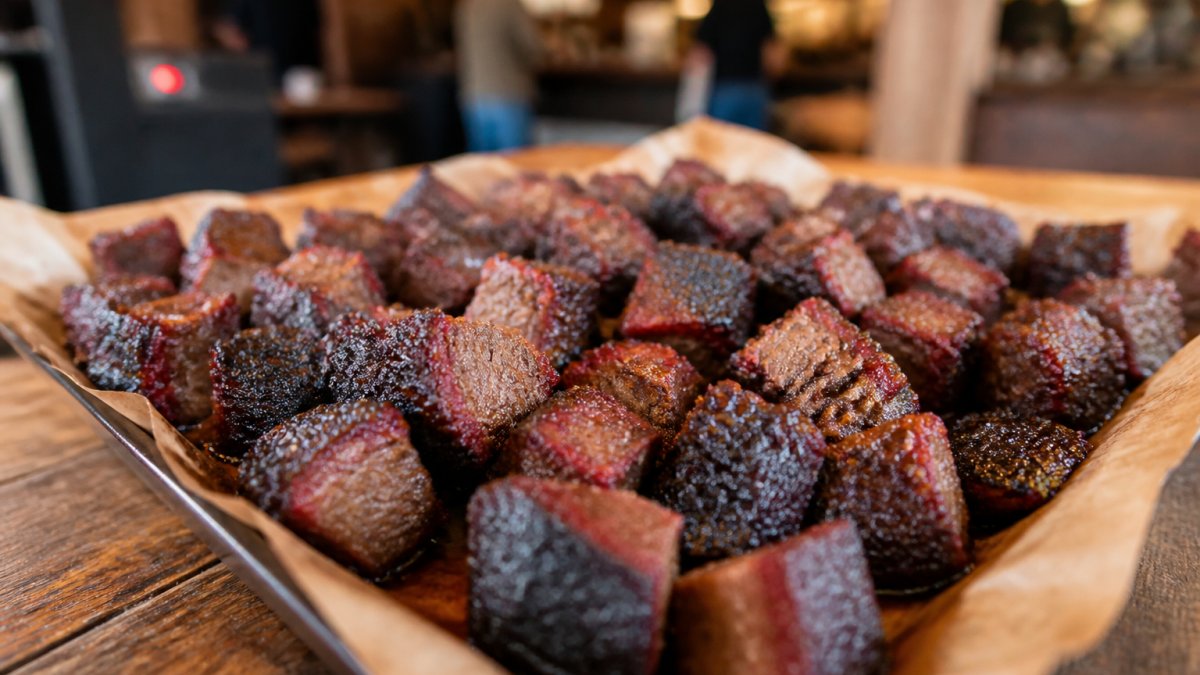
Traditional beef brisket burnt ends are cubes cut from the fatty point end of a whole packer brisket, re-seasoned, and returned to the smoker until the exterior caramelizes into a dark, sticky bark.
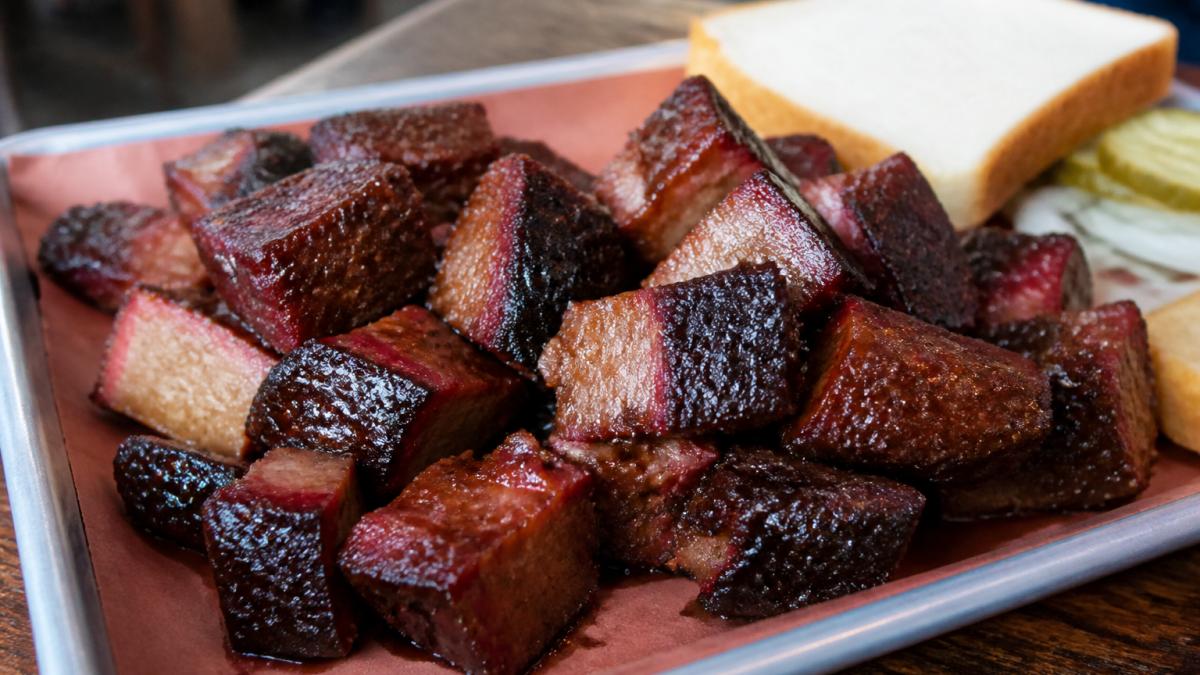
Authentic burnt ends have a distinct look: bark dark, almost black in places, with a mahogany sheen, and cubes that hold their shape but give easily when pressed.
Flavor-wise, expect a balance of smoke, rendered beef fat, and a sweet-savory glaze. Some pits keep the sauce light so the bark does the work; others lean on a molasses-based sauce.
Pork Belly Burnt Ends: The Other Version on Local Menus
Pork belly burnt ends are cubes of pork belly smoked and glazed until the fat renders and the exterior turns sticky and sweet. They are not traditional in the same sense as beef burnt ends, but they are common on local menus because pork belly is more consistent to source and cook than whole packer brisket, letting kitchens produce them on a predictable schedule.
The texture and flavor differ meaningfully from the beef version. Pork belly burnt ends are richer and softer, with more fat and a sweeter finish, and the bark is lighter and glossier because the glaze caramelizes faster on pork fat. Beef burnt ends have a denser, more fibrous chew and a deeper smoke-and-beef flavor.
How to Tell Which Version a Restaurant Actually Does Well
A pit that built its reputation on brisket usually does the beef version better, while a spot known for pork leans into the belly. That is a starting point, not a guarantee; the more reliable signal is what the menu emphasizes and what recent reviews mention by name.
Look for these signals when comparing the two versions at a local spot:
- The menu lists beef burnt ends and pork belly burnt ends as separate items with separate descriptions, rather than one generic "burnt ends" line.
- Recent reviews mention the specific version by name, "pork belly burnt ends" or "brisket burnt ends", rather than just "burnt ends."
- The restaurant's social media or specials board shows which version is available on a given day, since many kitchens rotate between them.
- The price difference between the two tells you something about sourcing: pork belly is generally cheaper per pound than brisket point, so a pork version priced the same as the beef version is worth questioning.
If a menu lists both, order a small portion of each to compare side by side. This is the fastest way to learn which version a given kitchen executes better, and it costs less than committing to a full plate of either.
Availability Differences Between the Two
Pork belly burnt ends tend to be more consistently available than beef because pork belly is easier to source and does not depend on whole-brisket yield. A restaurant out of beef by mid-morning may still have pork belly into the afternoon, so asking about the pork option can salvage a trip.
The trade-off is authenticity. If you want the traditional brisket point preparation, pork belly is a different product, not a substitute. Ask the kitchen which version they consider their signature, and treat the answer as a signal about where their effort goes.
Comparing Local BBQ Spots: Criteria That Separate Good From Great
Most directory listings rank barbecue spots by star rating and distance, which tells you little about whether a restaurant is worth the drive for burnt ends specifically. A spot can have a 4.8 rating and still treat burnt ends as an afterthought. The comparison that matters is narrower: does this kitchen make real burnt ends, can you get them today, and does the portion and price make sense for how you plan to eat.
Use the criteria below to compare barbecue restaurants near you before you commit to a drive.
| Criteria | What to Look For | Why It Matters |
|---|---|---|
| Cooking method | Point end smoked whole, then cubed and re-smoked | Signals true burnt ends, not flat meat |
| Availability window | Opens early, sells until sold out | Tells you when to arrive |
| Portion style | Sold by weight or by the order | Lets you try a small amount first |
| Menu transparency | Lists burnt ends as a distinct item | Shows the kitchen tracks the product |
| Ordering options | Dine-in, takeout, and call-ahead holds | Saves a wasted trip |
| Review recency | Mentions of burnt ends in the last few weeks | Confirms the item is still on the menu |
| Sides and sauces | House-made vs. packaged, gluten or dairy content | Affects the full meal, not just the meat |
Price and Portion Guidance
Burnt ends are usually the most expensive item per pound on a barbecue menu because the point end is scarce and labor-intensive. Most restaurants sell them three ways: by the pound, as a small or large order, or as a plate with one or two sides.
When comparing two spots, convert everything to a per-ounce basis. Ask how many ounces come with a small order versus a plate, and whether sauce, pickles, onions, and bread are included or charged separately.
Prices change often and vary by location, so confirm the current menu or call ahead for the day's pricing rather than relying on a photo of a menu board from two years ago.
Dietary, Accessibility, and Ordering Details
Burnt ends are just smoked beef point, so the meat is naturally gluten-free and dairy-free in most preparations. The variables are the rub, sauce, and sides. Some rubs contain gluten, and many sauces include molasses, brown sugar, or Worcestershire, which can carry gluten or anchovy.
Sides matter too. Common barbecue sides like mac and cheese, baked beans, and potato salad often contain dairy, gluten, or pork. For a group with mixed restrictions, ask which sides are safe and whether the kitchen can serve burnt ends dry with sauce on the side.
For accessibility and logistics, check three things before you go: parking (lot or street only), seating (inside tables versus counter-service only), and whether the restaurant offers online ordering or delivery.
Frequently Asked Questions
How can I find barbecue restaurants serving burnt ends nearby?
Start with a map search using 'burnt ends near me' and filter for barbecue restaurants with recent photos of brisket. Check whether burnt ends appear as a named menu item rather than a special. Call ahead the morning you plan to visit, since burnt ends availability depends on how many whole briskets the kitchen smoked that day. Ask specifically what time they usually sell out.
Should I call ahead to check whether burnt ends are available?
Yes. Burnt ends come from the brisket point, and each whole packer brisket yields only a few pounds of them. Most barbecue restaurants run out by early afternoon, and some sell out within two hours of opening. A quick call before you drive over saves a wasted trip. Ask whether they have them today, how long they expect them to last, and whether you can reserve a portion.
What are burnt ends, and what should I look for on a menu?
Burnt ends are cubes cut from the fatty point of a smoked beef brisket, returned to the smoker or tossed in sauce until the edges caramelize. On a menu, look for 'brisket burnt ends' or 'burnt ends' listed as its own item, not folded into a sandwich description. Authentic versions have a dark bark, visible fat marbling, and a glossy exterior from rendered collagen and sauce.
Can burnt ends be made with pork belly?
Yes. Pork belly burnt ends follow the same method: cube the belly, smoke it, then glaze and caramelize the pieces. They are richer and softer than beef versions, with a distinct pork flavor rather than deep beef taste. Some barbecue restaurants offer both and label them clearly. If you prefer traditional beef brisket burnt ends, confirm which version a menu item refers to before ordering.