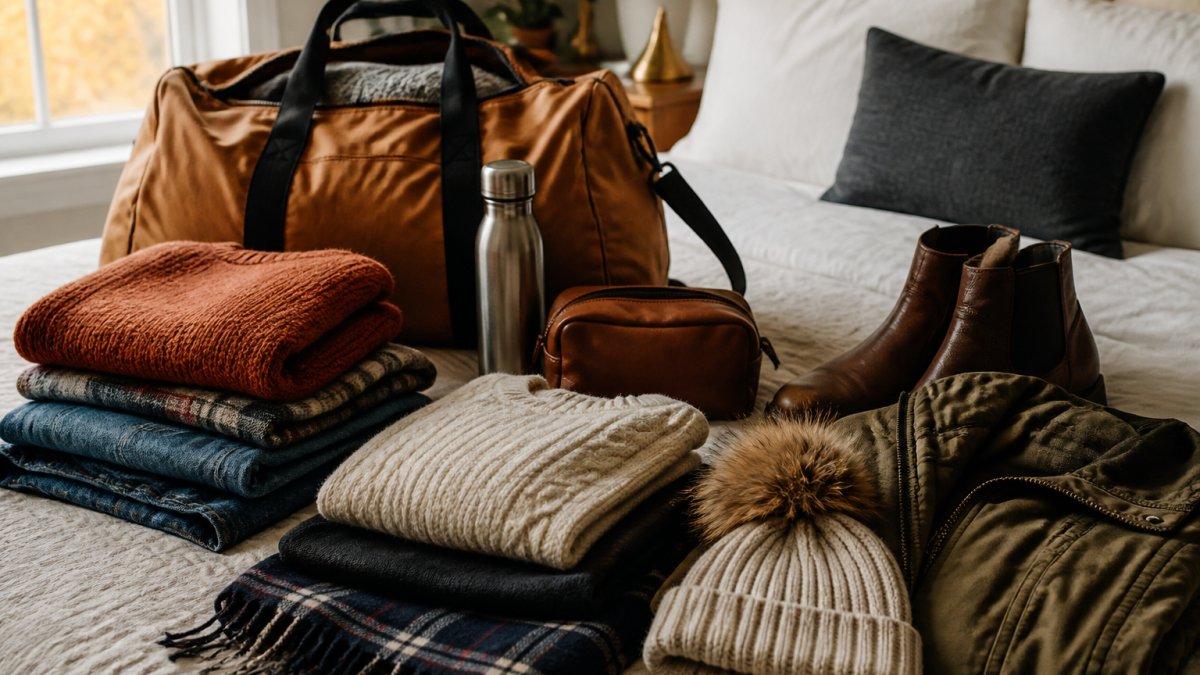
Last Updated: October 30, 2026
Quick Summary
Pack for a fall weekend trip by building a small mix-and-match wardrobe around the three-layer formula: a moisture-wicking base, an insulating mid layer, and a weather-blocking outer layer. Add one spare bottom, broken-in walking shoes, and small essentials like a charger, umbrella, and medication.
- Fall temperature swings of 20 to 30 degrees between morning and afternoon are common, so pack for both ends of the day.
- For two nights, pack two base layers, one mid layer, one outer layer, and one spare bottom.
- Check the forecast three days out, again 24 hours before, and once more the morning of departure.
- Pack toiletries and medication first, and keep medication in your day bag rather than checked luggage.
- Roll base layers and socks, fold the mid and outer layers flat, and keep toiletries in an outer pocket.
Table of Contents
- Start With the Fall Weekend Packing List Basics
- What to Wear on a Fall Weekend Trip: Layering That Handles 30-Degree Swings
- Packing for Unpredictable Fall Weather
- A Two-Night Trip Packing List That Fits in One Bag
- Toiletries, Medication, and Personal-Care Essentials
- Packing Methods and Luggage Organization
- Build Your Weekend Bag Before You Leave
- Frequently Asked Questions
Start With the Fall Weekend Packing List Basics
A fall weekend packing list works best when you build it in two layers: the clothing you wear and the non-clothing items that keep the trip running. The weather in autumn often changes faster than an itinerary does. A morning that starts near freezing can turn mild by lunch, and an evening outdoor activity can drop cold again.
Pack for a fall weekend trip by choosing a small set of mix-and-match pieces, then adding the small essentials most people forget. For destination-specific ideas, see the Kansas City Travel Guide. Below, we break down exactly what goes in the bag and how much of it you actually need.
The Core Clothing Categories
Start with these categories and build outward:
- Base layers: two or three tees or light long-sleeve tops
- Mid layers: one sweater and one light fleece or hoodie
- Outer layer: one jacket that blocks wind and light rain
- Bottoms: one pair of jeans or travel pants, plus one comfortable alternative
- Footwear: one broken-in walking shoe and one pair of boots
- Accessories: a scarf or travel wrap, a hat, and light gloves
That core covers most weekend trips. Everything else is a variation on it.
Non-Clothing Essentials to Add
Clothing gets all the attention, but the trip falls apart without the small stuff:
- Phone charger and a portable battery
- Reusable water bottle
- Compact umbrella
What to Wear on a Fall Weekend Trip: Layering That Handles 30-Degree Swings
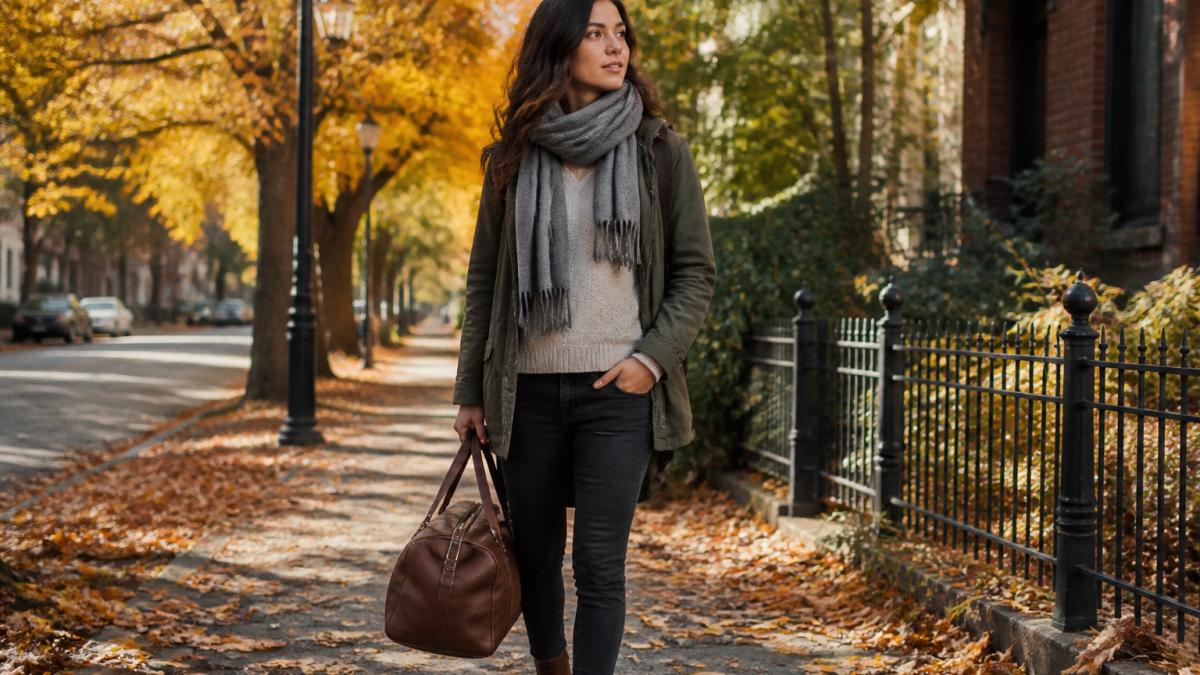
The best approach to a fall weekend trip is the three-layer formula: a moisture-wicking base, an insulating mid layer, and a weather-blocking outer layer.
The Three-Layer Formula
Here is how the layers work in practice:
- Base layer: a tee or thin long-sleeve top that moves sweat away from your skin
- Mid layer: a sweater, fleece, or hoodie that traps warmth
- Outer layer: a jacket that stops wind and sheds light rain
Wear all three in the morning. Shed the mid layer by midday. Add it back after sunset. That is the whole system.
Outerwear, Footwear, and Rain Gear
Your jacket matters more than any other single item. A water-resistant shell handles most fall conditions.
For footwear, bring one pair of broken-in walking shoes and one pair of boots. Avoid packing brand-new boots for a weekend trip.
A scarf or travel wrap earns its space too. It adds warmth on a cold morning and doubles as a light layer on a mild evening.
Packing for Unpredictable Fall Weather
Packing for unpredictable fall weather means building your bag around the forecast range for your destination, not the average and not your home city.
Check the forecast three days out, again 24 hours before you leave, and once more the morning of departure. For seasonal weather context, see the Kansas City Travel Guide. Then adjust quantities, not categories. The categories stay the same; only the weight and count of each layer changes.
A Forecast-Based Decision Guide
Use the destination forecast to pick your version of the core list:
- Cold (highs in the 40s or below, or a hard freeze expected): keep the insulating mid layer, add a warmer outer layer, pack gloves and a hat, and bring the boots as your primary shoe. Add one extra base layer.
- Mild (highs in the 50s and 60s): one mid layer is enough. Choose a lighter jacket that still blocks wind, and treat the scarf as optional warmth rather than a necessity.
- Rainy (steady rain or a high chance of showers): prioritize the water-resistant shell, a compact umbrella, and a waterproof layer for your feet. Skip the extra sweater and pack a second pair of socks instead.
Adjust for Your Itinerary, Not Just the Thermometer
The forecast tells you the temperature; your plans tell you how much time you will spend in it. A weekend built around outdoor activities, walking tours, or evening events needs the warmer mid layer and the boots.
A common pattern is to pack for the daytime high and forget the two coldest moments of the day: breakfast and after-dark. Plan your warmest layer around those windows, not around lunch.
A Two-Night Trip Packing List That Fits in One Bag
A two-night trip packing list fits in one carry-on bag when you pack by quantity, not by possibility. For two nights, you need two base layers, one mid layer, one outer layer, and one spare bottom. That is it.
Packing Quantities for Two and Three Nights
Use these quantities as your rule:
| Item | Two Nights | Three Nights |
|---|---|---|
| Base layer tops | 2 | 3 |
| Mid layers | 1 | 1-2 |
| Outer layer | 1 | 1 |
| Bottoms | 1 worn, 1 packed | 2 packed |
| Socks and underwear | 2-3 pairs | 3-4 pairs |
| Shoes | 2 pairs max | 2 pairs max |
| Sleepwear | 1 set | 1 set |
The math is simple: one base layer per day, everything else reused. A sweater worn twice is normal on a weekend trip. Nobody notices, and your bag stays light.
If you are planning a two-night getaway and want to confirm the trip length and bag strategy fit your plans, see the Kansas City Travel Guide.
Toiletries, Medication, and Personal-Care Essentials
Toiletries and medication are the items travelers forget most often, and they are the hardest to replace on arrival. Pack them first, before clothing, so they never get squeezed out of the bag.
Keep toiletries in travel-size containers that meet carry-on rules. Pack a small pouch with:
- Toothbrush, toothpaste, and floss
- Deodorant and a razor
- Basic skin care and lip balm
- Pain reliever and any prescription medication in original packaging
Medication deserves its own pouch. Keep it in your day bag, not your checked luggage, so it stays with you if a bag gets delayed. Bring a few extra days of any prescription, just in case the trip runs long (Traveling Abroad with Medicine | Travelers' Health).
Packing Methods and Luggage Organization
Packing methods decide whether one bag stays organized or turns into a mess by day two. The right method depends on your bag type and how you are traveling, so match the technique to the trip rather than defaulting to one habit.
Roll, Fold, or Both
Rolling clothes saves space and reduces wrinkles on knits and tees. Folding flat works better for structured items like a jacket or a collared shirt that you do not want creased. A practical hybrid: roll base layers and socks, fold the mid layer and outer layer flat, and lay the folded pieces at the bottom of the bag as a cushion for everything else.
Use Packing Cubes by Category
Packing cubes keep categories separate so you are not digging for socks at midnight. Assign one cube to base layers, one to socks and underwear, and one to toiletries and small gear. Keep the cube you need first, usually sleepwear or a fresh base layer, at the top of the bag.
Try this loading order:
- Roll base layers and socks into packing cubes
- Fold the mid layer and outer layer flat at the bottom
- Put shoes heel-to-toe along one side
- Keep toiletries and medication in an outer pocket
- Leave a small empty space for souvenirs
Keep Wet and Dirty Items Separate
A reusable tote or a dedicated laundry bag earns its space on any fall trip. Wet layers from rain, muddy boots, and dirty clothes all need somewhere to go that is not touching clean items. Pack one lightweight bag for this purpose and keep it empty until you need it.
Match the Bag to How You Are Traveling
A duffle bag works well for a weekend trip by car, where you can toss it in the trunk and carry it in one trip. A backpack suits travel days with lots of walking and stairs. If you are flying, check your airline's carry-on size limits before you pack, and keep liquids in containers that meet the carry-on rule so security does not force a repack at the checkpoint.
If you are arriving before your room is ready, use the Union Station luggage plan.
Build Your Weekend Bag Before You Leave
Before you zip the bag, run one final check against your itinerary. Match your packed layers to your actual plans: outdoor activities need the warmer mid layer and boots, while indoor days need less.
Then confirm the essentials:
- Forecast checked for the destination
- Medication and chargers in the day bag
- One outfit you can wear on the travel day
- Room left for anything you buy
When you are ready to plan the trip itself, get getting-around guidance.
Frequently Asked Questions
How many outfits should I pack for a fall weekend trip?
For a two-night trip, pack three tops, two bottoms, one sweater or mid layer, one jacket, and one pair of shoes you can walk in plus a backup pair. That gives you six mix-and-match combinations, which covers every meal, outing, and travel day without overpacking. Choose pieces that share a color palette so everything pairs together, and plan to rewear your bottoms at least once. A capsule approach like this keeps your bag light and still leaves room for a scarf, rain shell, and toiletries.
What shoes should I bring for a fall getaway?
Bring one pair of broken-in walking shoes or waterproof hiking boots and one pair of casual shoes for evenings. Fall weekends often mean wet sidewalks, leaf-covered trails, and uneven pavement, so a grippy sole matters more than style. Skip brand-new boots, since blisters ruin a short trip fast. If rain is in the forecast, a water-resistant pair with wool socks keeps your feet dry through a full day of walking and outdoor activities.
How do I pack light for a two-night trip?
Start with a two-night trip packing list and stick to it: three tops, two bottoms, one mid layer, one jacket, two pairs of shoes, and a single toiletry kit in a quart-size bag. Roll your clothes to save luggage space, wear your bulkiest jacket and shoes on travel days, and pack only travel-size toiletries. A 35-40 liter duffle bag or backpack handles this easily and fits in an overhead bin, so you skip checked-bag fees and baggage claim entirely.
What should I pack for a fall trip when it might rain?
Add a packable waterproof shell, a compact umbrella, and a dry bag or plastic pouch for your phone and wallet. Water-resistant footwear with wool socks beats cotton, which stays wet and cold. Packing for unpredictable fall weather means layering a rain shell over your sweater rather than bringing a heavy coat, since a shell blocks wind and rain and packs down small. Check the forecast 48 hours before you leave and swap in a warmer mid layer if overnight temperatures drop near freezing.
The real challenge with a fall weekend trip is not the packing. It is knowing what to do once you arrive, when the weather shifts and your plans need to flex. That is where Kansas City helps. Our locally grounded visitor guidance covers BBQ, jazz, and hidden gems, with curated recommendations for attractions and neighborhoods, plus expert insights to simplify your trip planning. Get started with Kansas City and build a weekend that fits the weather, not the other way around.
