Table of Contents
- What Regional Barbecue Style Actually Means
- The Four Main Barbecue Styles in America
- Texas Barbecue: Beef, Smoke, and Subregional Splits
- Carolina Barbecue: Whole Hog, Pork, and Vinegar
- Memphis Barbecue: Ribs, Pulled Pork, and Sauce on the Side
- Kansas City Barbecue Style: The Wide Tent of Regional Barbecue
- Regional Barbecue Sauces and the Rubs That Back Them Up
- Barbecue Regional Differences: A Side-by-Side Cheat Sheet
- Frequently Asked Questions
Last Updated: October 21, 2026
What Regional Barbecue Style Actually Means
Regional barbecue style is a set of cooking traditions tied to a specific place, defined by the meat a region favors, the wood and heat it cooks over, and the sauce or rub it serves alongside. In American barbecue, geography explains nearly everything on the plate.
At Kansas City, we spend a lot of time around pits and pitmasters, and the single most useful thing a visitor can learn is this: the word "barbecue" describes a method, not a flavor. That distinction is the throughline of this guide.
Here's what most guides get wrong: they treat regional styles as fixed rules. In practice, they're living traditions with disputed borders and plenty of local argument.
Barbecue vs. Grilling: The Line That Defines Everything
Barbecue is low-and-slow cooking over indirect heat, while grilling is fast cooking directly over a hot fire. That single distinction separates a 14-hour brisket from a 6-minute burger, and it's the foundation every regional style builds on.
- Smoking and slow-roasting: indirect heat, wood fire, hours of cook time, heavy smoke flavor
- Direct-heat grilling: high heat, short cook time, char and sear rather than smoke
Wood choice matters as much as time. Oak and mesquite dominate in Texas, hickory anchors Memphis and Kansas City, and fruitwoods show up in pockets throughout the South. As the USDA Food Safety and Inspection Service notes, low-and-slow cooking also demands attention to internal temperatures, which is why serious pitmasters cook to temp rather than to clock.
The Four Main Barbecue Styles in America
The four main barbecue styles are Texas, Carolina, Memphis, and Kansas City. Each one built its identity around local livestock, local wood, and local taste, and each has internal splits that make the map messier than a simple list suggests.
- Texas barbecue: beef-first, especially brisket, with oak or mesquite smoke and simple salt-and-pepper rub
- Carolina barbecue: pork-first, whole hog or shoulder, with vinegar and mustard sauces
- Memphis barbecue: ribs and pulled pork, dry rub or wet mop, with sauce served on the side
- Kansas City barbecue: the widest tent, covering beef, pork, and ribs with thick tomato-based sauce
That's the cheat sheet version. The real story is in the subregions.
Texas Barbecue: Beef, Smoke, and Subregional Splits
Texas barbecue is defined by beef, cooked over oak or mesquite, and served with sauce as an afterthought. Within the state, four subregions argue over the details.
- Central Texas: brisket, salt-and-pepper rub, oak wood, sauce-free serving
- East Texas: pork and hickory smoke, with sweeter, tomato-based sauces
- West Texas: mesquite wood and direct-heat cooking, often over open pits
- South Texas: heavily influenced by Mexican cooking traditions, with barbacoa and spicier seasoning
The throughline is meat-focused cooking. If you order brisket in Central Texas and ask for sauce, expect a raised eyebrow.
Carolina Barbecue: Whole Hog, Pork, and Vinegar
Carolina barbecue is pork barbecue, and it splits cleanly into two camps divided by sauce. Eastern North Carolina runs on whole hog and a thin vinegar-based sauce with pepper and little else. Lexington-style barbecue, from the western side of the state, uses pork shoulder and adds a touch of tomato to the vinegar base.
South Carolina pushes further, with a mustard-based sauce that traces to German settlement in the central part of the state. Tangy, sharp, and unapologetically pork-forward, Carolina barbecue is the clearest example of a region where the sauce is a seasoning, not a topping.
The National Park Service documents how deeply pork curing and smoking traditions run through the American South, and Carolina is where that history is most intact on the plate.
Memphis Barbecue: Ribs, Pulled Pork, and Sauce on the Side
Memphis barbecue is ribs and pulled pork, seasoned with a dry rub or mopped with sauce, and served with sauce on the side. That last detail is the giveaway.
Two cuts dominate: St. Louis-style ribs, a trimmed sparerib, and the full slab. Dry rub is the local signature, a spicy seasoning applied before the meat hits the pit. Wet ribs get mopped during cooking. Either way, the meat should stand on its own before the sauce enters the picture.
Kansas City Barbecue Style: The Wide Tent of Regional Barbecue
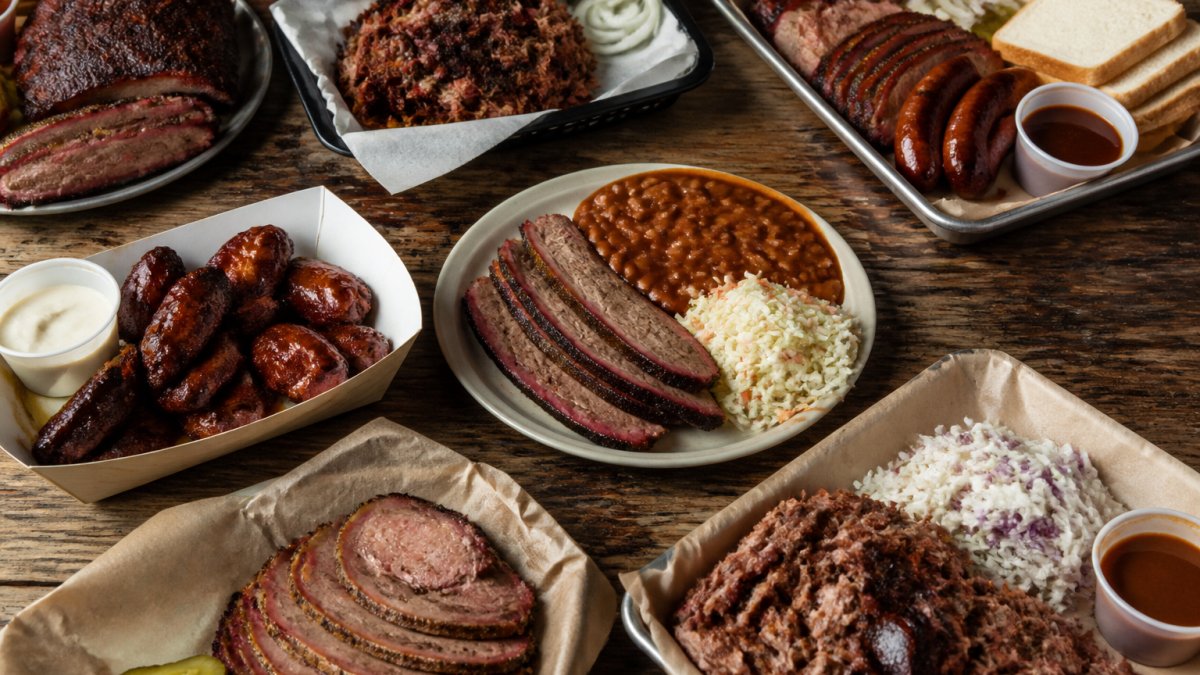
Kansas City barbecue style is the most inclusive of the regional traditions: beef, pork, ribs, sausage, and chicken all share the pit, and the sauce is thick, sweet, and tomato-based. This is where the regional barbecue map opens up rather than narrows.
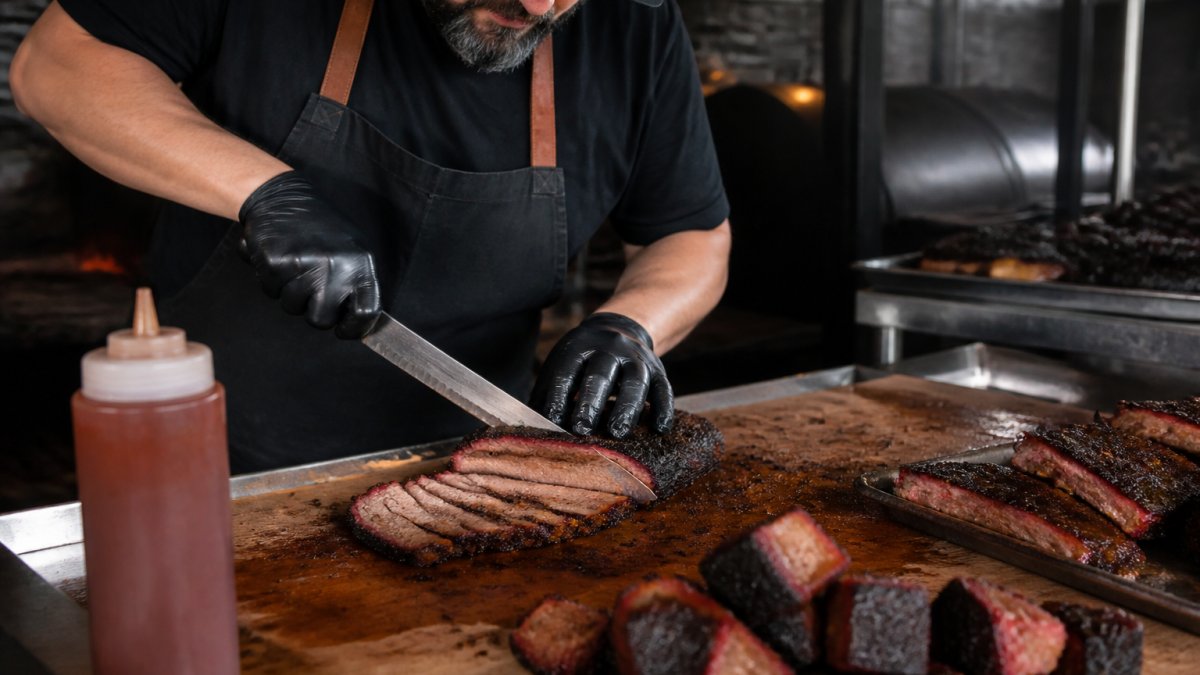
Burnt ends are the local signature, and the city's barbecue recipes borrow freely from every other region. That's not a weakness. It's the point.
Regional Barbecue Sauces and the Rubs That Back Them Up
Regional barbecue sauces fall into four families, and each one is built to solve a specific problem: cutting the richness of pork, complementing the smoke on beef, or adding a sweet crust to ribs.
| Sauce Style | Region | Base | Acidity | Sweetness | Best Paired With |
|---|---|---|---|---|---|
| Vinegar-based | Eastern North Carolina | Cider vinegar, pepper, cayenne | High | None to minimal | Whole hog, pulled pork |
| Mustard-based | South Carolina | Yellow mustard, vinegar, sugar | Medium | Medium | Pork shoulder |
| Tomato-based, sweet | Kansas City | Tomato, molasses, brown sugar | Low | High | Brisket, burnt ends, ribs |
| Dry rub, sauce on side | Memphis | Paprika, cayenne, garlic, brown sugar | None (dry) | Low to medium | St. Louis-style ribs |
How the base changes the bite. A vinegar sauce is thin enough to soak into chopped pork without masking the smoke, and the acid cuts the fat that whole hog carries.
Rubs follow the same logic. Texas keeps it to salt and coarse black pepper, a two-ingredient rub that lets the beef and oak smoke speak.
Barbecue Regional Differences: A Side-by-Side Cheat Sheet
Most regional comparisons stop at meat and sauce. The differences that actually change what lands on your plate come down to seven variables: signature meat, cut, wood, cooking method, seasoning, sauce, and serving style.
| Region | Signature Meat | Cut | Wood | Cooking Method | Seasoning | Sauce | Serving Style |
|---|---|---|---|---|---|---|---|
| Texas (Central) | Beef | Whole packer brisket | Post oak | Indirect, offset smoker, 12-18 hours | Salt and coarse black pepper | None or on request | Sliced, sauce-free |
| Texas (East) | Pork | Shoulder, ribs | Hickory | Indirect, low-and-slow | Salt, pepper, sometimes sugar | Sweet tomato-based | Chopped or sliced |
| Carolina (Eastern) | Pork | Whole hog | Hickory, oak | Direct over coals, long cook | Salt, pepper, vinegar | Thin vinegar and pepper | Chopped |
| Carolina (Lexington) | Pork | Shoulder | Hickory, oak | Indirect, low-and-slow | Salt, pepper, sometimes sugar | Vinegar with a touch of tomato | Chopped or pulled |
| South Carolina | Pork | Shoulder | Hickory | Indirect, low-and-slow | Salt, pepper | Mustard-based | Pulled |
| Memphis | Pork | St. Louis-style ribs, shoulder | Hickory | Indirect, low-and-slow | Dry rub (paprika, cayenne, garlic) | Dry or wet mop; sauce on side | Dry or wet ribs |
| Kansas City | Beef, pork, sausage | Brisket, ribs, burnt ends | Hickory | Indirect, low-and-slow | Sugar-forward rub | Thick tomato-molasses | Glazed or sauce on side |
How to read the table. The cut and the cooking method move together.
Where the labels break down. These categories are traditions, not borders. East Texas sits closer to Carolina pork than to Central Texas beef.
A quick decision guide. If you want beef and smoke with no sauce, order Central Texas brisket. If you want acid and pork, order eastern Carolina chopped hog.
If you're coming from one tradition and visiting another, expect the smoke flavor and the sauce to shift before the meat does.
For anyone planning a barbecue crawl, our locally grounded Kansas City recommendations cover the pits, the neighborhoods, and the timing that make a trip work. The American Culinary Federation is a useful resource for understanding how regional cooking traditions are preserved and taught, and it explains why these styles survive rather than blend into one.
Frequently Asked Questions
What type of barbecue is Kansas City known for?
Kansas City barbecue style is a wide-tent tradition built on slow-smoked meats, especially pork ribs, brisket, and burnt ends, served with a thick, sweet, tomato-based sauce. Unlike Texas or Carolina, it does not limit itself to one meat or one sauce. You will find beef, pork, chicken, and sausage on the same menu, often with several sauce styles at the table. It is the most inclusive of the four main barbecue styles, which is why it travels well and confuses people who expect a single signature dish.
What are the four main American barbecue styles?
The four main barbecue styles are Texas, Carolina, Memphis, and Kansas City. Texas barbecue is beef-forward, with brisket and ribs cooked over oak or mesquite and often served sauce-free. Carolina barbecue centers on pork, whole hog or pulled, with vinegar- and mustard-based sauces. Memphis barbecue focuses on pork ribs and pulled pork, with dry rubs and sauce on the side. Kansas City barbecue style is the broadest, pairing slow-smoked meats with thick tomato-based sauces and a wide menu.
How do regional barbecue sauces differ from each other?
Regional barbecue sauces follow the meat they are built for. Eastern North Carolina uses a thin vinegar and pepper sauce, while Lexington-style adds a little tomato and sweetness. South Carolina has a mustard-based sauce. Memphis favors a thin, tangy tomato sauce served on the side. Kansas City barbecue style is known for a thick, sweet, molasses- or brown-sugar tomato sauce. Texas often skips sauce entirely or serves it on the side, letting the smoke and bark speak for the meat.
What is the difference between regional American barbecue and Korean barbecue?
Regional American barbecue relies on low, indirect heat and wood smoke over several hours, producing bark, smoke rings, and tender meat. Korean barbecue is a tabletop grilling tradition where thin cuts of beef or pork are cooked quickly over direct heat and wrapped with lettuce, rice, and ssamjang. The words overlap, but the cooking method, the cuts, and the serving style are different. Regional barbecue differences in the US come from wood, sauce, and meat choice; Korean barbecue is a separate culinary tradition.
Where does the word barbecue come from?
The word barbecue most likely comes from the Spanish word barbacoa, which described a wooden frame used by Indigenous Caribbean people to cook meat over a fire. English speakers adopted and adapted the term as they moved through the American South, and it came to describe both the cooking method and the social event around it. That history helps explain why regional barbecue style varies so much: the tradition spread across different landscapes, woods, and communities, and each place shaped it to fit local meat and fuel.
What meats are associated with each barbecue region?
Texas barbecue is associated with beef brisket, beef ribs, and sausage, with pork ribs in East Texas. Carolina barbecue is pork country, including whole hog, pulled pork, and pork shoulders. Memphis barbecue leans on pork ribs, especially St. Louis-style ribs, and pulled pork. Kansas City barbecue style covers brisket, pork ribs, burnt ends, chicken, and sausage, often on one platter. The meat choices follow what was locally available and affordable, which is why beef dominates Texas and pork dominates the Carolinas.
The hardest part of regional barbecue isn't learning the four styles. It's choosing where to start, and a city with this many pits makes that decision genuinely difficult. Kansas City exists to simplify it, with locally grounded visitor guidance, curated recommendations for barbecue and jazz, and expert insights that go past the same popular spots everyone else lists. Get started with Kansas City and plan a barbecue trip built on local knowledge rather than guesswork.