Table of Contents
- What Makes Jazz Authentic
- Jazz for Beginners: Building Your Foundation
- How to Identify Jazz Music: Core Characteristics
- Best Jazz Albums for Beginners: Essential Listening
- Evaluating Live Jazz Venues and Performances
- Where to Listen to Jazz Online
- Discovering Authentic Jazz Beyond Major Cities
- Frequently Asked Questions
Last Updated: October 14, 2026
What Makes Jazz Authentic
Authentic jazz is a living tradition rooted in improvisation, cultural heritage, and genuine musicianship.
The difference between authentic jazz and tourist-oriented versions comes down to intention. Real jazz venues prioritize the music and the musicians. They're built around intimate listening, not background ambiance. The musicians take risks.
Understanding Jazz Traditions and Regional Roots
Jazz emerged from African American communities in the early 1900s, blending blues, ragtime, and European harmonic traditions.
When you find authentic jazz, you're connecting with a specific tradition: blues-rooted jazz carries emotional depth, bebop reflects 1940s complexity and speed, and hard bop brought soul music's intensity.
Understanding these roots helps you evaluate what you're hearing: a venue that respects jazz history features musicians who know the standards and why certain approaches matter.
Live Performance vs. Recorded Music
Live and recorded jazz serve different purposes. Albums let you study arrangements; live performances capture the spontaneity that defines jazz, where the same song never sounds the same twice.
Recorded music builds knowledge; live music lets you experience the tradition as it evolves. Both matter when you want to find authentic jazz.
Jazz for Beginners: Building Your Foundation
Starting with jazz can feel overwhelming. There's decades of history. Hundreds of musicians. Thousands of albums. You don't need to master everything at once.
Listen widely and notice what draws you in. Some love the smoothness of ballads, others the energy of uptempo swing. Both are authentic.
Key Elements to Listen For
Jazz has recognizable building blocks. Learning them helps you appreciate any performance.
Improvisation is the core.
Call and response comes from African musical traditions: one musician plays a phrase, another answers, building a conversation. Listen for this back-and-forth between instruments.
Blues tonality gives jazz its emotional depth.
How to Identify Jazz Music: Core Characteristics
Jazz music has specific sonic markers. Once you know what to listen for, you'll recognize it instantly.
Instrumentation and Improvisation
Traditional jazz ensembles feature horns, rhythm section, and melody instruments. A trumpet or saxophone plays the main voice.
But ensembles vary, from trios to ten pieces or more. The core principle remains: musicians create together in real time.
Improvisation isn't random playing.
Listen for moments where a musician steps forward with a solo.
Rhythm, Swing, and Tempo
Jazz rhythms feel different from pop or classical music.
Swing is the rhythmic feel that makes jazz swing, not played straight, but a pocket that feels loose and tight at once.
Tempo varies. Some jazz is slow and contemplative. Some moves at breakneck speed. Uptempo tunes demand precision and stamina.
Best Jazz Albums for Beginners: Essential Listening
Building a collection helps you understand jazz's range. Start here and expand based on what resonates.
Classic Albums Across Different Styles
Hard bop brought soul and blues feeling into jazz, accessible and emotionally direct, with memorable melodies and strong grooves.
Cool jazz emphasized space and restraint, with sophisticated arrangements and relaxed tempos. Perfect for focused listening.
Bebop moved fast and complex, with challenging chord changes at high speed.
Start with albums that appeal to you emotionally. You don't need to like everything. Jazz is diverse.
Evaluating Live Jazz Venues and Performances
Live jazz venues vary dramatically. Some prioritize the music; others treat jazz as background for drinks and conversation.
Verify Before You Go: A Pre-Visit Checklist
Most disappointing jazz nights trace back to an unchecked listing, a venue advertising "live jazz" that actually hosts a DJ, cover band, or background pianist. Run these checks first:
- Confirm the date, not just the venue. Schedules change weekly. Check the venue's own calendar or social feed for your specific night, not a third-party listing that may be months stale.
- Look for a named lineup. "Live jazz tonight" tells you nothing; "Trio featuring [saxophonist] and [bassist]" means someone is accountable for the music.
- Check what kind of set it is. A listening-room set, a dinner set, and a jam session are three different experiences. Jam sessions can be the most authentic and least predictable, great for emerging players, less reliable for a polished performance.
The In-Room Authenticity Checklist
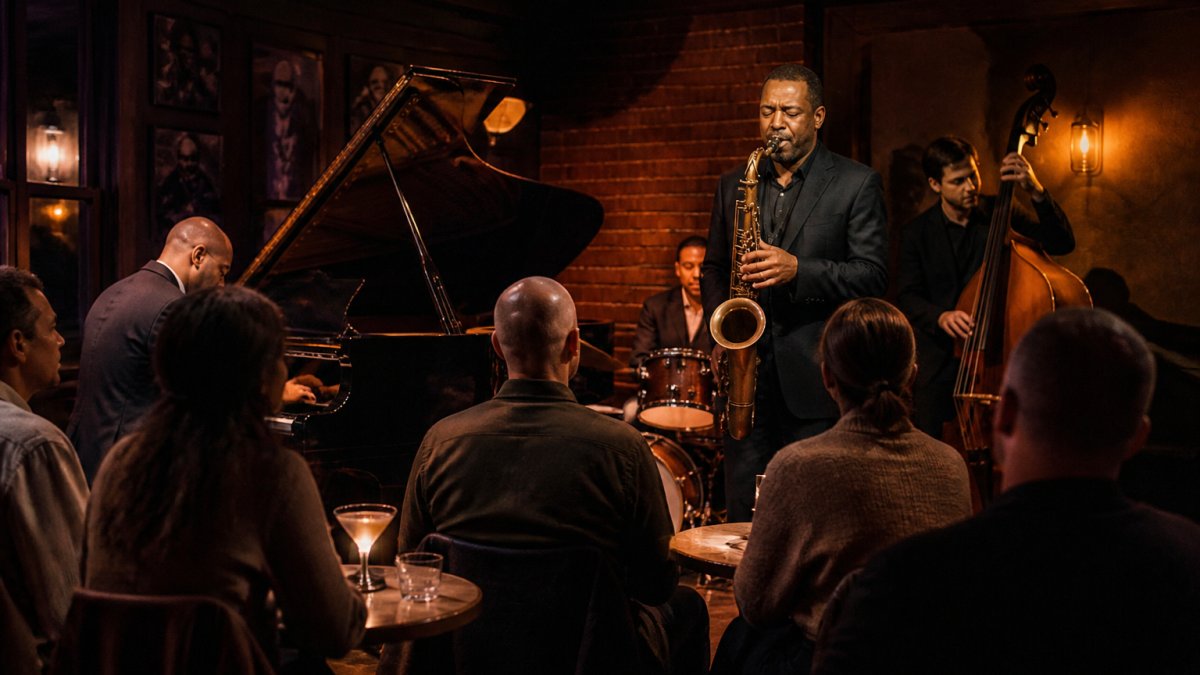
Once seated, the room itself tells you most of what you need to know. Authentic jazz rooms share these traits:
- Sound is prioritized. The room is arranged so the music carries, a real sound system, a defined performance area, and acoustics that reward listening rather than drown it in conversation.
- The audience is listening. People face the band, quiet down when a solo begins, and applaud solos, not just the end of tunes. This is the clearest signal you're in a listening room, not a bar with a band.
- Musicians are treated as professionals. They have a defined set time, a real stage, and a working relationship with the venue. Many authentic rooms book the same players on a recurring night, letting them develop material and a following.
A venue might have one or two of these traits. Authentic rooms have most of them.
Judging the Performance Itself
You don't need a music degree to hear whether a band is genuinely improvising. Listen for these cues:
- Solos that develop. A real solo builds, starting somewhere, taking a turn, arriving somewhere else. A memorized solo loops the same phrases.
- Eye contact and cueing. Watch the band: do they look at each other, nod, point, or signal a key change? That nonverbal conversation is the mechanism of live jazz.
- Risk and recovery. Improvisation sometimes fails. A band that takes a chance, lands awkwardly, and recovers together is more authentic than one that never leaves safe ground.
Finding Local Musicians and Emerging Artists
The best jazz experiences often feature musicians you haven't heard of yet, local artists building their craft, hungry and creative.
Check local music listings and community calendars. Follow musicians on social media. Ask bartenders and servers where they go to hear jazz.
Emerging artists often play smaller venues or off-peak times, an advantage.
Where to Listen to Jazz Online
Streaming platforms make jazz accessible anytime. Building a personal collection helps you develop taste and knowledge.
Streaming Platforms and Jazz Archives
Major streaming services carry extensive jazz catalogs. Explore systematically, starting with foundational artists and working forward.
Dedicated jazz platforms offer deeper curation, rare recordings, live sessions, and expert recommendations, some focused on specific eras or styles.
University archives and public radio stations maintain jazz collections, often free, with liner notes and context that help you understand what you're hearing.
Building Your Personal Jazz Collection
Start with albums that excite you. Don't force yourself through music that bores you.
Create playlists by mood, tempo, or style to navigate your collection and discover connections between artists.
Listen actively: put the phone away, focus on what you're hearing, and notice how the instruments interact.
Discovering Authentic Jazz Beyond Major Cities
Jazz thrives everywhere, not just in famous jazz cities. Regional scenes have their own character and history; finding them requires intention and respect for the communities that keep the music alive.
Why Regional Scenes Sound Different
Jazz grew out of African American communities in the early 1900s and developed differently depending on where it took root. New Orleans brass-band traditions, Kansas City swing, Chicago's early recorded jazz, and hard bop from cities like Detroit and Philadelphia all reflect the neighborhoods, churches, unions, and audiences that supported them.
Approaching these scenes respectfully means a few habits:
- Listen before you opine. You're a guest in someone's musical community. Ask questions rather than offering verdicts.
- Support the room. Buy something, tip the band if customary, and stay for the set you came for.
- Credit the musicians. If you share a photo or recommendation, name the players. Local artists build reputations one listener at a time.
A Method for Finding Scenes in Smaller Towns
There's no national directory of authentic jazz. Work outward from the people who make the music:
- Start with the musicians, not the venues. Search for local jazz players, teachers, and bandleaders. College music departments, high school jazz band directors, and private instructors are often the connective tissue of a scene.
- Check community institutions. Churches with gospel or jazz services, community centers, libraries, arts councils, and cultural organizations frequently host jazz that never appears on ticketing sites.
- Visit independent record stores. Staff usually know which nights have live music and which players are worth hearing.
- Follow the recurring night. A standing weekly or monthly jazz night, at a restaurant, brewery, hotel bar, or cultural center, is often the most reliable entry point in a small town.
- Ask a working musician. After one set, ask the band where else they play. Working players are the most accurate map of a local scene.
Verifying What You Find
Smaller scenes have less online infrastructure, so verification matters more:
- Confirm the event is current. Community calendars go stale. Check the venue's own channels or call ahead.
- Confirm it's actually jazz. "Live music" can mean anything. Ask what style the group plays.
- Confirm the lineup. A named band or bandleader is a stronger signal than an unnamed "jazz night."
Jazz Festivals and Community Events
Festivals celebrate jazz traditions, bring musicians together, and attract serious listeners.
Look for festivals featuring local musicians alongside known artists, they balance accessibility with authenticity.
Community events like outdoor concerts, church performances, and street festivals often feature jazz, frequently free or low-cost. Overlooked by visitors, they're where locals actually experience music.
Frequently Asked Questions
How can you tell if a song is jazz?
Jazz is characterized by improvisation, syncopated rhythms, and specific instrumentation like saxophone, trumpet, and piano. Listen for musicians playing off each other, unexpected chord changes, and a swing feel, a rhythmic bounce that gives jazz its distinctive groove. The melody often takes unexpected turns as performers improvise, which sets it apart from more structured musical genres.
What should a beginner listen for in a jazz performance?
Focus on the interplay between musicians, how they respond to each other's solos. Notice the rhythm section (drums and bass) creating the foundation, while the lead instruments trade phrases. Pay attention to how improvisation unfolds; musicians aren't simply playing written notes but responding creatively in real time. This call-and-response dynamic is the heart of authentic jazz.
Where can you listen to jazz online for free?
Many platforms offer free jazz streaming with ads or limited access. Check public libraries, which often provide free access to music streaming services. Jazz archives and educational institutions frequently host free recordings. YouTube contains countless jazz performances and albums. However, subscription services like Spotify and Apple Music offer unlimited access with affordable plans, giving you broader access to authentic jazz albums and emerging artists.
How do you find new jazz musicians and emerging artists?
Follow local jazz venues and festivals on social media, they announce upcoming performances and new talent regularly. Listen to jazz radio stations and podcasts that feature emerging musicians. Explore Bandcamp and independent music platforms where modern jazz artists share their work. Ask musicians and venue owners directly; they often know the most exciting new voices in the local scene and can point you toward hidden gems.
Finding authentic jazz means listening actively, respecting the tradition, and seeking out spaces where musicians and audiences connect genuinely. Kansas City's jazz heritage runs deep, and our guide helps you experience the real thing, whether you're exploring live venues, building your album collection, or discovering emerging local musicians. Start with what excites you, remain curious about regional traditions, and let the music guide your journey into this rich, evolving art form.