Last Updated: October 26, 2026
Quick Summary
Exploring historic jazz clubs respectfully means treating the room as a guest in someone's living room: stay quiet during sets, silence your phone, clap at the end of a solo, and order between songs. Learn the venue's history beforehand and support the musicians, staff, and neighborhood that keep the music playing.
- Arrive early, since doors often open well before the first set begins.
- Check the cover charge before sitting down, as many rooms charge at the door.
- Ask staff or regulars about the room's history instead of assuming you know it.
- Ask before you shoot, and turn off flash and shutter sound.
- Stay for the second set when you can, since late sets often make the room's money.
Table of Contents
- Start With the Room: Historic Jazz Club Etiquette
- Know the History Before You Walk In
- Jazz Club Photography Etiquette: What You Can and Can't Capture
- Live Jazz Listening Tips for First-Timers
- How to Support Local Jazz Musicians and the Venues That Book Them
- Plan a Responsible Visit: Timing, Neighborhoods, and Accessibility
- Build Your Own Jazz Itinerary Before You Go
- Frequently Asked Questions
Start With the Room: Historic Jazz Club Etiquette
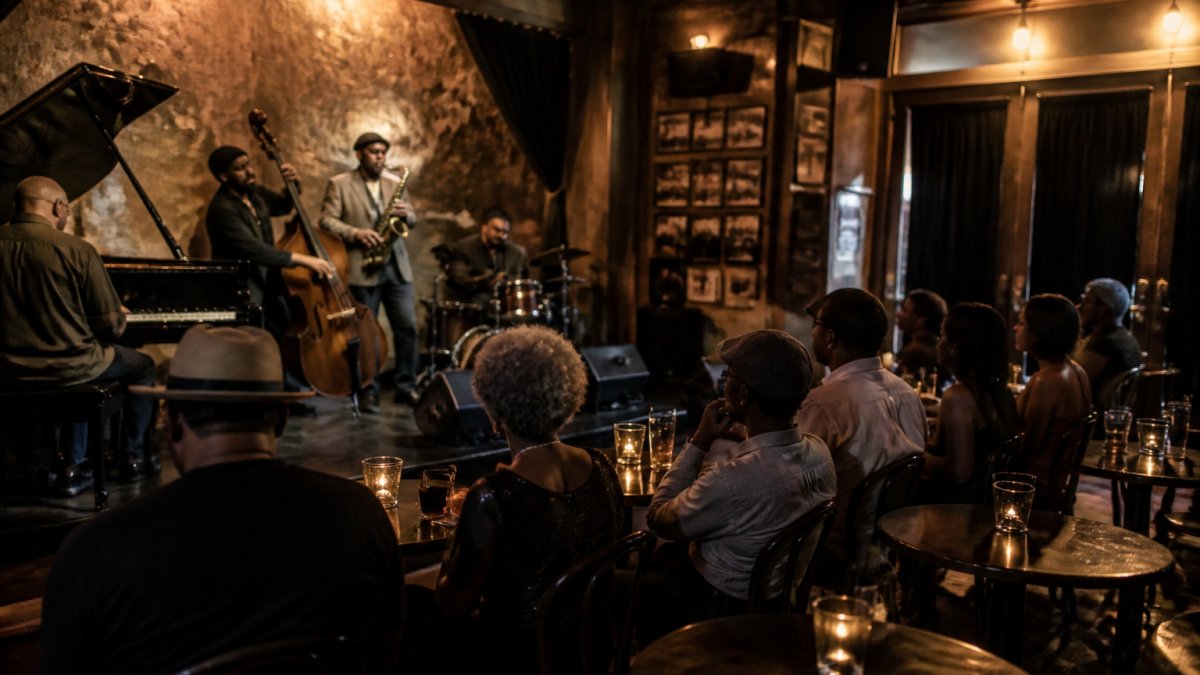
Learning how to explore historic jazz clubs respectfully starts with one idea: you are a guest in someone's living room. These rooms were built for listening, not for talking.
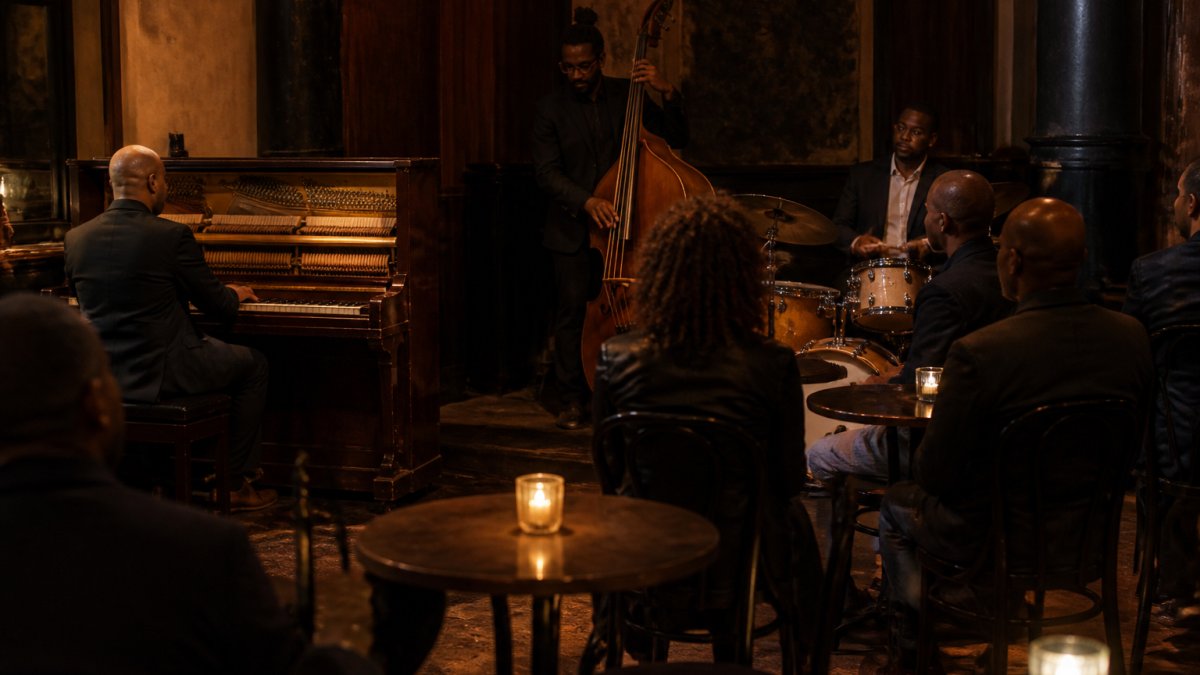
That single rule covers most of what you need to know. The rest is detail.
Historic jazz club etiquette is the set of unwritten rules that keep a listening room working: quiet during sets, modest drinking, phones away, and respect for the musicians and the people around you.
Before the First Note: Arrival, Seating, and Cover Charges
Arrive early. Doors often open well before the first set, and early arrival lets you pick a seat that suits you. Tables near the stage reward close listeners. Seats at the back or bar suit people who want to talk between sets.
- Check the cover charge before you sit down. Many rooms charge at the door.
- Ask about table minimums when you order.
- Keep your voice low while the band sets up.
- Sit where you can see the stage without blocking anyone's view.
Watch out: walking in mid-song and hunting for a seat is the fastest way to annoy a full room. Wait at the back until the tune ends.
When to Clap, When to Stay Quiet, and How to Order
Clap at the end of a solo, not during it. Applause after a horn or piano solo is welcome in most rooms. Talking over a ballad is not.
Order between songs when you can. A server working a quiet room will thank you for catching their eye rather than calling out.
- Silence your phone before the first note.
- Keep drink orders simple during sets.
- Save loud conversation for the break.
- Watch the regulars; they show you the room's rhythm.
A quick reference for the room rules that keep a historic listening room working.
| Situation | What to do |
|---|---|
| Arriving | Arrive early; doors often open before the first set |
| Choosing a seat | Tables near the stage for close listening; back or bar for talking |
| Cover charge | Check it before you sit down; many rooms charge at the door |
| Table minimums | Ask about them when you order |
| Walking in mid-song | Wait at the back until the tune ends |
| Applause | Clap at the end of a solo, not during it |
| Ordering | Order between songs and keep drink orders simple |
| Phones | Silence your phone before the first note |
Know the History Before You Walk In
Context changes how you hear a room. Jazz grew out of specific neighborhoods, and many historic venues sit inside communities that shaped the music, and that still live there. Knowing that history makes you a better guest, not just a better listener.
The respectful angle most guides skip: history here is not a museum exhibit. The people who built these rooms are the same people who keep them running, and the neighborhood around a club is part of the experience.
Read the Room's Story, Not Just Its Plaque
Before you go, spend ten minutes on the venue's own site or a local music-history source. Look for:
- When the room opened and what it was before it was a club. An underground history tour covers the Prohibition-era roots of these venues.
- Which musicians are associated with the stage, and whether they are still active locally.
- Whether the venue is part of a preservation effort or a historic district. A walking tour of Westport's historic district adds context to the blocks around the club.
- What the neighborhood looked like before redevelopment, and what changed.
A Jazz Audiences Initiative literature review examined how audiences connect with jazz through interviews and focus groups, and the takeaway for visitors is simple: the more you understand the tradition, the more the music gives back.
Learn Without Spectating
The line between appreciation and spectacle is thin. A few habits keep you on the right side:
- Ask staff or regulars about the room's history instead of assuming you know it.
- Don't narrate the neighborhood to your companions as if it were a set piece.
- Buy from nearby businesses before or after the set; the club is part of an ecosystem.
- If a venue is in a residential area, keep noise down on the street, not just inside.
Connect History to Preservation
Many historic rooms survive because of preservation efforts, zoning fights, and community advocacy. When you visit, you're stepping into that story.
Read a venue's story before you go. It takes ten minutes and changes the whole night.
Jazz Club Photography Etiquette: What You Can and Can't Capture
Ask before you shoot. That is the whole rule in one line. Some rooms allow photos without flash; others ask for no cameras at all during sets.
Jazz club photography etiquette comes down to three habits:
- Turn off the flash and the shutter sound.
- Never photograph the band mid-solo from the front row.
- Ask the artist or staff before posting anything online. Guidance on photography-focused tours covers respectful shooting practices.
Respectful shooting keeps venues welcoming to visitors with cameras.
Live Jazz Listening Tips for First-Timers
You do not need a music degree to enjoy a set. You need a little structure for your ears.
Live jazz listening tips that help most newcomers:
- Find the melody first, then listen for who carries it.
- Follow the bass line; it holds the song together.
- Pick one instrument per tune and track it.
- Let the drums tell you where the beat lands.
How to Follow a Solo, a Horn Line, and a Rhythm Section
A solo is a conversation. The player states an idea, bends it, and hands it back to the band. Listen for the moment the rhythm section answers.
Horn lines trade phrases between players. When the trumpet finishes a phrase, the sax often picks it up. Rhythm sections lock the bass, drums, and piano into one pulse.
- Nod along to the pulse, not the melody.
- Notice when the band drops quiet before a solo.
- Applaud the soloist, then the band.
That is the whole skill. It gets easier every set.
How to Support Local Jazz Musicians and the Venues That Book Them
Buy something. Cover charges, drinks, and records are how these rooms stay open. Small rooms run on thin margins, and every table matters. But support is more than spending, it's understanding how the money moves and making choices that keep the ecosystem healthy.
How the Money Actually Works
A cover charge at the door typically goes toward the band and the room's overhead; it is not pure profit. Table minimums exist because a seat taken by a slow drinker is a seat the venue can't turn. Tipping is split in different ways, some rooms pool tips for staff, some pass a jar for the band. Ask, and tip accordingly.
- Pay the cover charge without asking for a discount.
- Meet the table minimum rather than nursing one drink all night.
- Tip the staff and, when there's a band jar, the players.
- Buy merch or a record directly from the band; that money often goes straight to the musicians.
Support Beyond the Night Of
- Stay for the second set when you can; late sets are often where the room makes its money.
- Follow the venue and share their schedule with friends.
- Ask the musicians what they are working on, players remember visitors who treat them like people, not background music.
- Return to the same room more than once; regulars are what keep a club alive.
The Trade-Offs Worth Knowing
Supporting a room sometimes means accepting inconvenience: a two-drink minimum, a cash-only door, a late start. Those aren't hassles, they're the business model. If a room's rules don't fit your budget or schedule, choose a different night rather than negotiating at the door.
That is how you support local jazz: pay fairly, tip well, show up more than once, and treat the people who make the music as the reason you came.
Plan a Responsible Visit: Timing, Neighborhoods, and Accessibility
Plan around the music, not the other way around. Sets usually run in the evening, and weekends fill up. Weeknights offer more space and calmer rooms.
- Check set times before you book dinner.
- Confirm accessibility before you arrive; older buildings often have steps.
- Pick a neighborhood and stay within walking distance. A nightlife and clubs category helps you find venues by neighborhood and vibe.
- Keep food and drink plans flexible around set breaks.
Watch out: booking a late dinner that runs into the first set means missing the best part of the night.
Build Your Own Jazz Itinerary Before You Go
Build the night in layers. One early set, one break for food, one late set. That rhythm suits most visitors and keeps you fresh.
Pick two venues that sit close together. Then check set times, cover charges, and accessibility for each. Browse a jazz and live music venues category to choose rooms that fit your night.
- Choose one historic room for the early set.
- Pick a second spot within walking distance.
- Leave a gap for dinner between sets.
- Confirm hours the day before you go.
That is how to explore historic jazz clubs respectfully: know the room, know the history, and support the people who keep the music playing.
Frequently Asked Questions
How should you behave at a historic jazz club?
Treat the room like a listening room, not a bar. Arrive on time, silence your phone, and keep conversation low once the band starts. Order drinks between songs rather than mid-solo. Clap after solos and at the end of tunes, not during a quiet intro. If a venue has a cover charge, pay it at the door and tip the staff.
Is it okay to take photos during a jazz performance?
Jazz club photography etiquette starts with asking: check the venue's posted policy or ask staff before the set. If photos are allowed, turn off the flash and shutter sound and shoot only between tunes. Never film a full set or livestream. When in doubt, put the phone away and be present.
How can visitors support historic jazz clubs and local musicians?
Pay the cover charge without haggling, buy a drink or food item, and tip the band and bar staff. Buy merchandise or a CD directly from the musicians when available. Share the venue respectfully on social media only if photography is permitted. You can also sign up for a venue's mailing list and bring friends next time.
How do you learn about a jazz club's history respectfully?
Read up before you go, then ask staff or longtime regulars open questions rather than quizzing the band mid-set. Avoid treating the room as a museum exhibit or interrupting musicians to ask about the past. Respectful curiosity means listening more than performing your knowledge, and letting the people who built the room tell its story.
The hardest part of a jazz night is planning it well, and that is exactly where we help. Kansas City gives you locally grounded visitor guidance, curated recommendations for attractions and neighborhoods, and deep coverage of the city's jazz and live music scene. Start with our venue listings, build an itinerary around real set times, and walk in knowing the room before the first note sounds. Get started with Kansas City and plan a jazz night that respects the music and the people who make it.
